
Overview
When you are building or resurfacing a pickleball court in Texas, you are engineering for extremes. A surface that performs beautifully in cooler, milder climates will rapidly fail under the combination of relentless Texas sun, triple-digit summer heatwaves, and sudden Gulf or high-plains thunderstorms.
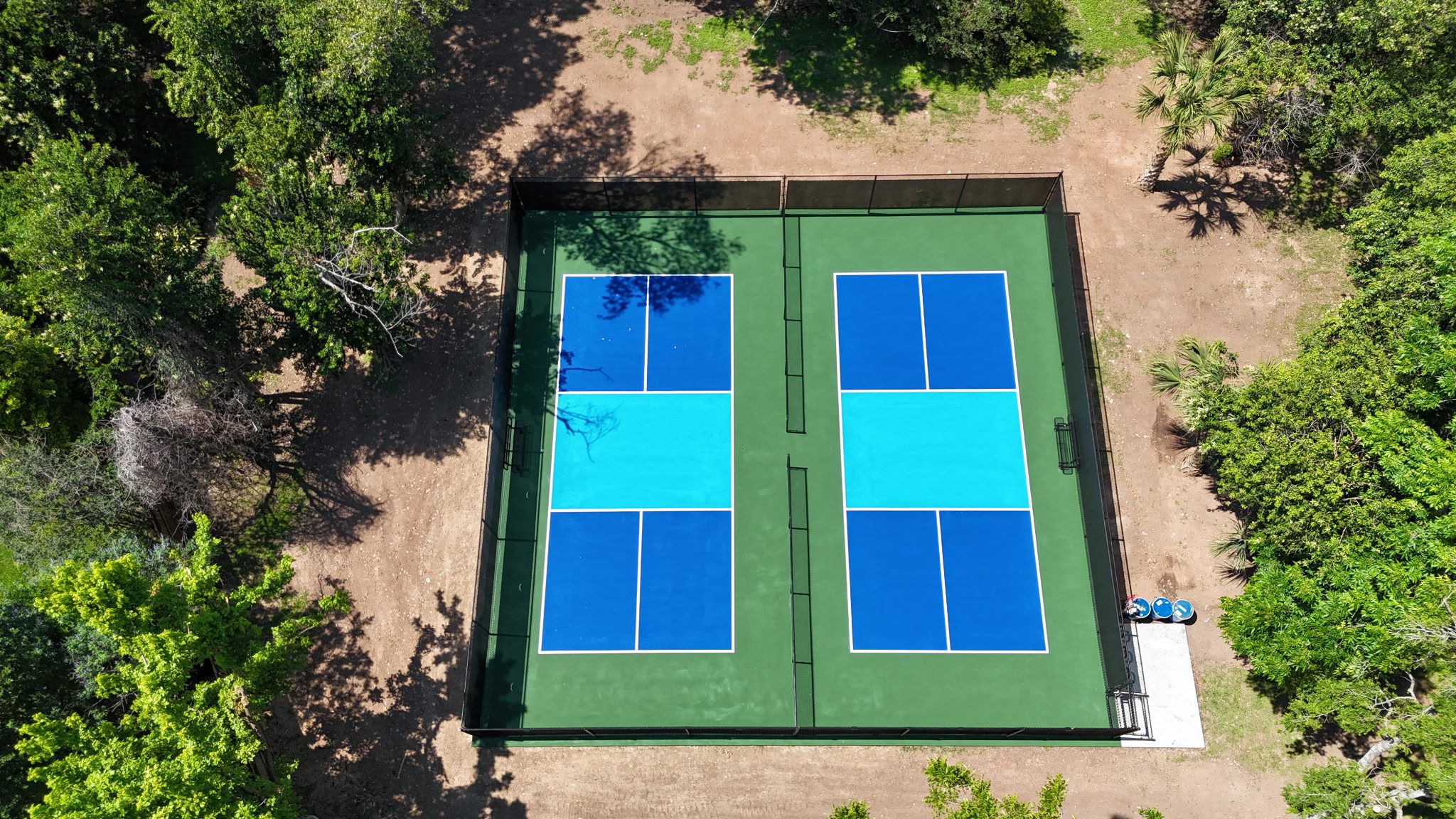
The absolute best pickleball court surface for Texas weather is a professionally applied, silica-fortified acrylic system built over a post-tensioned concrete slab with an integrated perimeter drainage system.
A pickleball court handles far more localized friction than a tennis court. Because pickleball is a game of rapid deceleration, short lunges, and constant pivoting right along the kitchen line, the surface traction bears immense stress. If your surface material isn't explicitly rated for intense UV stabilization and high structural heat thresholds, the binder will soften, the texture will bald, and the slab will crack within a couple of seasons.
At Quality & Heritage Court Services, we build athletic assets specifically engineered to handle the brutal Texas climate. We skip the generic design shortcuts and focus on the material science required to keep your floor flat, high-traction, and split-free for years.
Building a new court or upgrading a commercial facility in Texas? Connect with our team today for a transparent site and soil evaluation.
Why Does the Texas Climate Dictate Your Material Choice?
Unlike indoor facilities or northern regions, outdoor courts in Texas face severe environmental degradation from day one.
How does extreme heat damage standard court paint? Between June and September, asphalt and concrete surface temperatures can easily climb past 140°F. Under that intense thermal load, standard retail-grade paints lose their structural elasticity and begin to cook, turning brittle and dry.
What happens during sudden weather shifts? Texas weather is famous for rapid changes, such as a blistering 100°F afternoon followed by a sudden, violent thunderstorm that drops temperatures by thirty degrees in minutes. This extreme thermal shock causes immense contraction stress across the slab. If your court base and coating system aren't engineered to handle these sudden movements, the surface will web-crack and tear away from the substrate.
What Is the Best Base and Surface System for Texas Soil?
While asphalt is highly cost-effective in some states, post-tensioned concrete is the undisputed gold standard for Texas's soil and weather conditions. Much of the state sits on highly expansive clay that swells when wet and shrinks when dry. This constant shifting will easily crack and warp a standard asphalt or non-reinforced concrete base.
By pouring a post-tensioned concrete slab, in which internal steel cables are torqued to high structural tension, we create a rigid, monolithic pad that resists soil movement. Over that stable foundation, we pull specialized acrylic layers that deliver key playing benefits:
How do we achieve a consistent, high-texture ball response? Pickleball uses a lightweight, perforated plastic ball that relies completely on the surface grit to spin and bite. Our silica-fortified acrylic resins ensure a uniform pop and predictable bounce across the entire playing grid.
How do we guarantee slip-resistant traction? We mix specific, round-grain silica sands into the acrylic binder to create an abrasive texture that prevents players from slipping during fast kitchen-line exchanges, even when the court is slick with morning dew or humidity.
How Do We Manage Court Surfaces During Rains and Humidity?
Texas isn't just about dry heat; regional weather brings heavy downpours and thick coastal or morning humidity that can destroy a poorly drained athletic facility.
If water pools on an acrylic surface for extended periods, it undergoes a process called hydrostatic blistering. Solar heat bakes the standing water, turning it into hot vapor that forces its way beneath the paint film, breaking chemical bonds and causing the surface to peel off in large flakes. To prevent water retention, our court builds feature a two-part defense system:
| Engineered System | Concrete Field Function |
|---|---|
| Precision Single-Plane Slope | We grade the foundation slab to a precise 1% slope on a single plane, ensuring rainwater sheets off the playing lines instantly rather than pooling into "birdbaths." |
| Subsurface Stone Swales & Drains | We dig and install gravel-packed French drains along the low side of the pad to capture runoff and route groundwater safely away from the foundation before it can lift the slab. |
Is It Worth It to Upgrade to a Cushioned System?
For private estates, country clubs, and dedicated commercial pickleball venues, we frequently install multi-layer cushioned acrylic systems.
Instead of applying the color coats directly over the bare concrete, we lay down multiple base layers of liquid-rubber particles. These rubber granules stay flexible under the hot sun, forming an underground shock-absorbing mat. Because pickleball requires nonstop starting, stopping, and jarring changes of direction on a small court, a cushioned floor drastically reduces joint fatigue and lower-back impact for players without compromising the crisp, fast bounce of the plastic ball.
How Do You Maintain a Texas Court to Resist High Heat?
Choosing a premium surface system lowers your long-term maintenance costs, but it doesn't eliminate the need for basic field upkeep. To maximize the life of a Texas court, your grounds team should follow a strict preservation routine:
Weekly Debris Clearing: Keep the court blown free of leaves, dirt, and dust. Windblown silt acts like an abrasive sandpaper grid when ground into the floor by tennis shoes, rapidly wearing down the color texture.
Preventive Power Washing: Wash the court down every spring to clear out airborne film, pollen, and hard-water deposits that clog the pores of the texturized acrylic finish.
Immediate Fissure Sealing: If you notice a hairline crack forming along the perimeter soil line, seal it immediately with an elastomeric compound to prevent sudden thunderstorm downpours from penetrating the subgrade dirt.
Can we build a pickleball court out of asphalt in Texas?
You can, but it requires highly aggressive maintenance. Texas's intense heat will gradually soften the asphalt binder, making it prone to localized depressions and widespread "alligator cracking" as the underlying soil expands and contracts. Post-tensioned concrete is highly recommended for long-term durability.
How often does a Texas pickleball court need to be repainted?
Due to the intense UV exposure and heavy foot traffic around the kitchen area, expect a high-use Texas court to require a fresh resurfacing every 4 to 6 years to restore its traction and lock down the base against water intrusion.
Why does humidity delay the actual construction or resurfacing process?
Acrylic court coatings are water-borne formulas that cure via evaporation. If the humidity in Texas is too high, water cannot escape the wet mix, causing successive layers to trap moisture. This ruins the polymer cross-linking and leads to systemic surface bubbling later on.