
Overview
Building a padel court is a serious structural project that’s part engineering, part precision manufacturing. Because a padel court is a "glass-and-steel" enclosure, you aren't just paying for a surface; you are paying for the heavy-duty concrete foundation, the custom tempered-glass walls, and the specialized court lighting that all have to survive being left out in the elements.
While the "all-in" price can vary depending on where you are building and the quality of the materials you choose, understanding what’s under the hood—like the foundation and the structural steel gauge—will help you avoid lowball bids that lead to cracked glass or sagging courts down the road.
What are the main factors that affect padel court construction cost?
Think of a padel court build as having three distinct price buckets:
The Foundation: This is the most critical part. Before we bolt down a single piece of steel, we have to pour a reinforced, laser-leveled concrete slab with its own dedicated drainage system. If your ground isn't perfectly level and rock-solid, the glass panels will eventually stress and crack under their own weight.
The Structure: Not all steel kits are created equal. You are paying for the durability of the galvanized, powder-coated steel framework. Cheap, thin-gauge steel will rust in a few seasons, while high-grade structural steel can handle the heavy cable tensioning required to keep the walls and nets tight.
The Finishing: This includes the specialized fibrillated turf that helps the ball "grip" the surface, the tempered glass panels, and the high-output LED lighting meant to handle fast-paced night play.
How does the site location change the price?
If you already have a flat, solid concrete pad ready to go, you are ahead of the game. But for most clients, we have to start from scratch. If our crew needs to clear trees, import structural fill, or dig out a deep drainage swale to prevent the court from turning into a lake during a storm, the site-prep costs will be your biggest variable. Sites that are easily accessible for our trucks and heavy equipment are always cheaper to build on than tricky spots that require manual labor or special cranes to lift materials into place.
Are all padel surfaces the same price?
Definitely not. The turf inside a padel court is specially engineered to hold a specific amount of rounded silica sand, which is what gives the ball that signature "pop" off the floor.
Higher-end tournament turf uses a denser fiber count, which feels softer under the feet and resists matting down under heavy foot traffic. While you can opt for entry-level turf to save a little cash upfront, a premium sand-injected system is a much better investment if you want a court that stays responsive for a decade without needing a mid-life replacement.
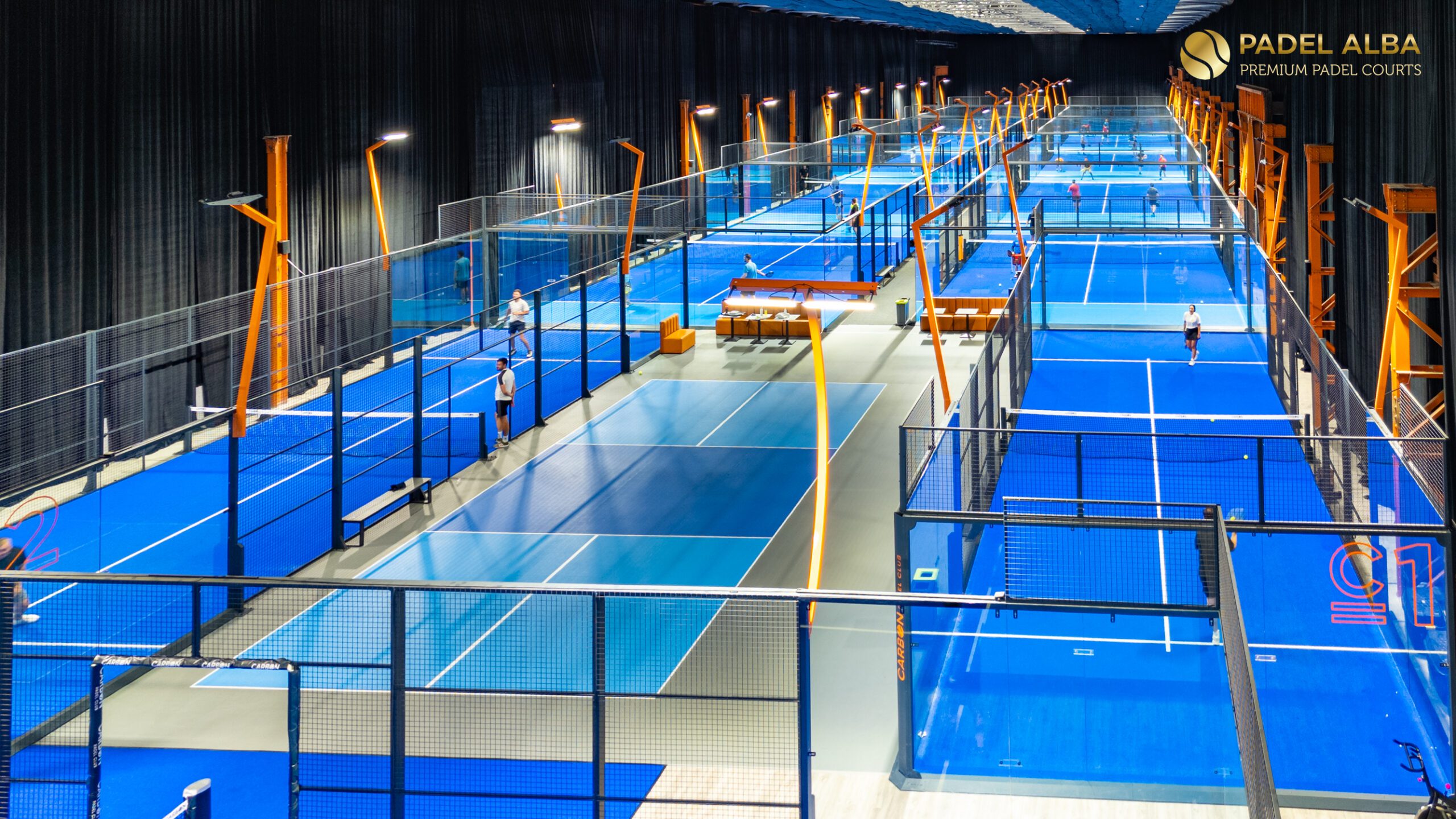
Can I save money by building multiple courts?
If you have the space, absolutely. The bulk of your cost is "mobilization"—getting the engineering team, the concrete pumps, the specialized installers, and all that heavy glass and steel to your property. By doing two or four courts at once, we can streamline the labor, buy materials in bulk, and keep the equipment on-site rather than bringing it back and forth. This is why commercial clubs and resorts almost always see a lower "per-court" cost than private homeowners.
Why shouldn't I just go with the cheapest construction quote?
Padel is a game of high-impact walls and fast-paced pivots. When you cut corners on a padel court, you aren't just risking a cosmetic issue—you’re risking structural failure.
We see "budget" courts fail because the steel was too thin to handle the wind load or the glass panels weren't anchored with enough tension-opening hardware. If those walls start to wobble or the glass shifts, you end up paying for a complete teardown and rebuild. Investing in a builder who understands proper anchor bolt depth and wind-load engineering means your court stays rigid, the bounce stays true, and the walls stay safe for years.