
Overview
Building a padel court is a highly precise engineering project that goes way beyond putting up a fence and rolling out some fake grass. Because padel relies on the ball bounding sharply off back walls and players crashing into the enclosures during intense rallies, the build requires a seamless mix of structural steelwork, impact-resistant tempered glass, and specialized subbase drainage.
Whether you are adding a court to a private backyard, a commercial sports club, a school, or a public park, understanding the actual building steps ensures your court stays safe, flat, and fast for years.
What goes into the planning and site checkout before the trucks roll in?
Every great padel build starts with a meticulous site evaluation long before any heavy machinery rolls in.
Contractors have to analyze soil stability, check for underground utilities, evaluate natural drainage of the slope, and plan equipment access. This phase is also when you map out the court's physical orientation, ideally keeping it on a strict North-South axis so players don't find themselves serving directly into a blinding morning or late-afternoon sun. It's also the time to sort out local building permits, setbacks, and noise or lighting codes.
How Is the Foundation Prepared?
The absolute bedrock of a padel court is a perfectly level, steel-reinforced concrete slab.
First, crews excavate the footprint, stripping away all organic topsoil and roots that could rot and cause the ground to sag later. Next, they compact the subgrade dirt and lay down a stone base coupled with a perimeter French drain system to route groundwater away. Finally, a monolithic concrete pad is poured, typically with a precise 0.5% to 1% single-plane slope. This engineering trick ensures that heavy rainwater sheets off the court immediately rather than forming stagnant puddles that ruin the playing surface.
When Are the Steel Structure and Glass Walls Installed?
Once the concrete slab has fully cured, the court’s signature skeletal frame goes up.
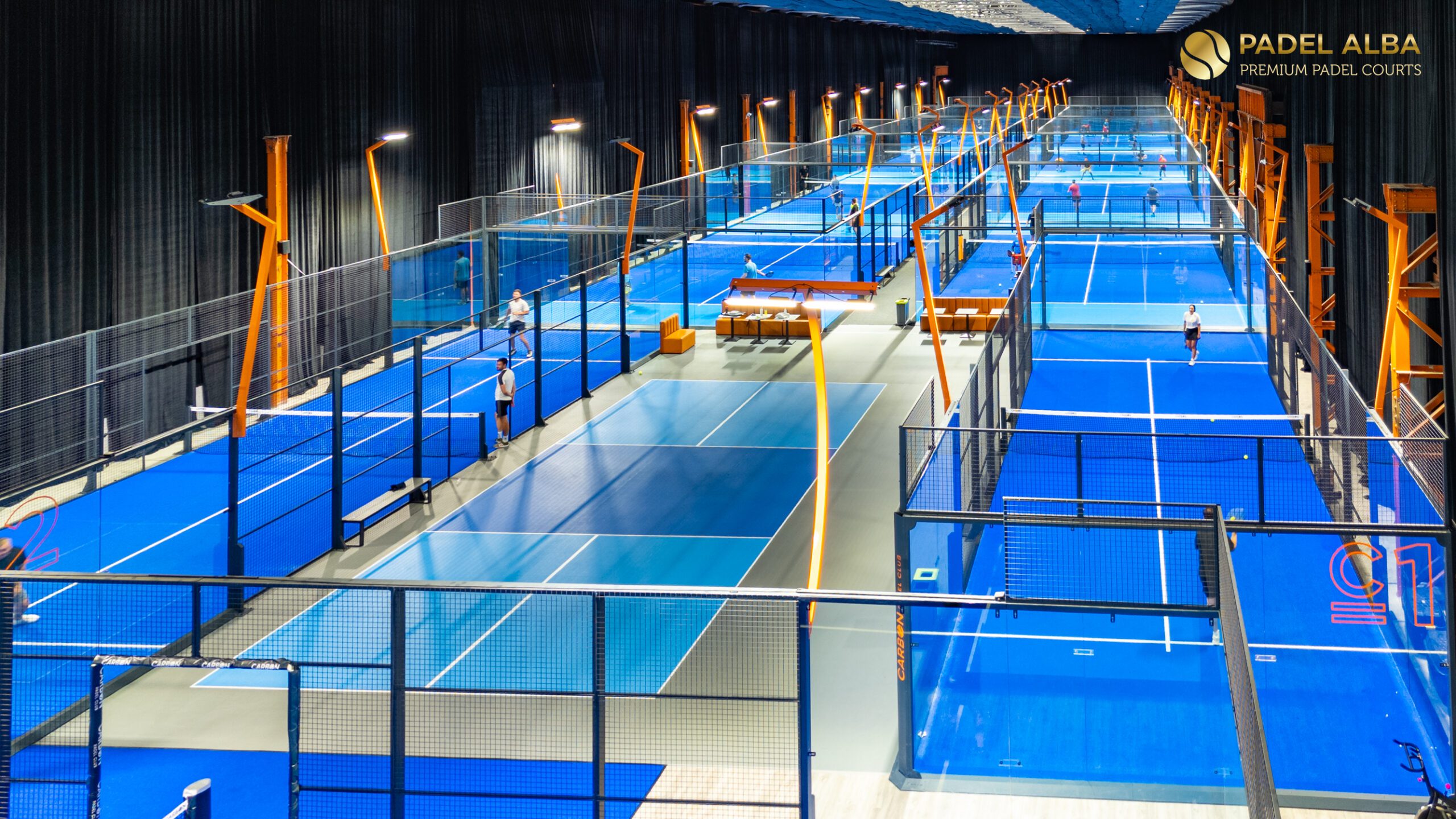
The heavy-duty, galvanized steel pillars and mesh panels are bolted deep into the concrete perimeter. This metal cage must be perfectly plumb and strong enough to withstand high-impact collisions from players without warping. Right after that, thick tempered glass panels (usually 10mm to 12mm thick) are mounted into the steel frame using specialized rubber gaskets and heavy-duty hardware. True, predictable ball rebounds depend entirely on these glass walls being perfectly flush and aligned to the millimeter.
How do crews lay down the actual playing floor?
Once the steel cage is bolted down and secure, the team can finally transition to the floor.
Almost all modern padel courts use a specific type of high-density synthetic turf designed to withstand heavy foot scuffs. The crew rolls out the turf mats across the concrete, cuts the edges perfectly to match the perimeter, and glues the seams together using heavy-duty bonding tape. Once the grass mat is completely locked down, they spread a precise amount of kiln-dried silica sand over the top. This sand settles deep down into the synthetic blades, keeping the entire floor completely flat, allowing players to pivot smoothly without catching an ankle, and ensuring the ball bounces true every single time.
What happens during the final hardware setup?
Once the glass walls are locked in and the turf is glued down, the crew finishes up by hanging the gear that actually makes the court playable.
First, they bolt the light poles directly into the corner framing. They use high-output LED fixtures that throw clean, even light across the entire floor. The angles are adjusted on-site so players don't get blinded when looking straight up to track a high lob. Next, they anchor the steel net posts to the concrete base and lower the center strap to the exact regulatory height. Finally, they spend time adjusting the entry gates so they swing open smoothly and click shut tightly, while dialing in the line markings and finishing up any custom club branding.
How Long Does It Take to Build a Padel Court?
Once the heavy equipment arrives on-site and the raw materials are delivered, the active physical build usually takes anywhere from 3 to 5 weeks.
However, the total project timeline depends heavily on how long your local municipality takes to issue zoning permits, as well as the 28-day hydration window required for a brand-new concrete base. Building a single backyard court goes much faster, while multi-court commercial complexes naturally take longer due to large-scale earthwork and advanced utility rough-ins.
Why do you need an experienced specialist to install a padel court?
Padel courts are highly engineered sports facilities with zero margin for structural error.
If a contractor tries to cut corners on subbase compaction, the concrete pad will shift, cracking your glass panels and ruining the ball bounce. Poorly aligned steel columns create uneven gaps that can cause tempered glass to shatter under thermal stress or player impact. Hiring an experienced, professional court builder guarantees that every structural load, drainage line, and turf seam is executed to tournament standards.
What Happens After Construction Is Complete?
Before the court is officially handed over and opened for matches, a project supervisor should run a rigorous quality audit.
This final inspection includes a flood test to ensure water drains cleanly off the floor, a hardware stress check to verify that all glass-to-steel connections are secure, and a diagnostic light meter run to ensure there are no dark zones on the court at night. Setting up an easy, routine maintenance schedule at this stage, like sweeping the sand infill once a week, will keep your new asset looking and performing like a pro court for decades.