
Overview
Most pickleball courts need repainting about every four to six years. Some make it longer. Others begin looking tired after only a few seasons. How often pickleball court painting is needed depends on use, weather, drainage, and the quality of the previous work.
A private court that sees relaxed weekend games will not wear as much as a busy HOA or club court. Texas sunlight also takes a toll. Color begins to fade, lines lose their sharpness, and the areas where players stop and turn may feel smoother than the rest of the surface.
There is no reason to repaint simply because the calendar says it is time. Look at the court first. If the coating is still bonded, the lines are clear, and players have dependable traction, the court may have more life left in it. If paint is peeling or cracks are opening, repainting alone probably will not be enough.
Quality & Heritage Court Services inspects the existing surface before recommending any work. That makes it easier to separate ordinary paint wear from problems that need repair.
Think your court may be due for attention? Contact us to arrange an on-site evaluation.
What Causes Pickleball Court Paint to Wear Out?
Pickleball court paint rarely wears evenly. Most owners first notice fading near the baseline or around the kitchen, where shoes repeatedly grip and turn. Meanwhile, a quieter corner of the same court may still look close to new.
Daily use is only part of the explanation.
• Foot traffic: Pickleball involves plenty of short, quick movements. Players stop, turn, and push off in familiar spots, slowly wearing away the gritty surface texture.
• Hours in direct sun: Texas sunlight gradually drains the color from an outdoor court. A fully exposed court often fades sooner than one that receives afternoon shade.
• Water left after rain: A puddle that returns after every storm is more than an inconvenience. It collects dirt, leaves stains, and often indicates a low area that is not draining properly.
• Problems beneath the paint: A fresh coating will not adhere well if the previous surface was damp, dusty, mildewed, or already peeling. It might look good at first, then begin lifting around the weak areas.
• Rough cleaning: Holding a pressure washer too close can cut visible streaks into the finish. Strong chemicals and stiff brushes can be just as damaging.
• Carts and heavy equipment: Not every mark comes from a player. Dragged chairs, maintenance equipment, hard wheels, and heavy objects can scrape or gouge the coating.
This is why repainting by age alone can be misleading. A family court used on weekends might still look good six years later. At a busy school or HOA, the most active areas could look worn after only a few seasons. The surface itself will tell you far more than the date on the last invoice.
How Do You Know When It Is Time to Repaint?
Walk the court instead of judging it from the gate. Fading is easier to see from a distance, but traction, peeling, and small damaged areas become more noticeable once you are on the surface.
Watch for the following changes:
• Lines look dull, broken, or difficult to follow during play.
• The kitchen, baselines, or common serving areas have worn pale.
• Some sections feel smoother or slicker than others.
• Color has become noticeably uneven.
• Old repair marks now stand out against the surrounding finish.
• Small areas of coating have begun to flake or peel.
• Dirt and stains remain even after careful cleaning.
A little fading does not make a court unusable. In many cases, owners repaint because the surface has lost its clean appearance, not because it has failed.
Loss of traction deserves more attention. Pickleball involves quick stops and short changes of direction. If players no longer feel secure underfoot, the surface should be inspected.
Peeling is another warning sign. It may come from moisture, poor bonding, incompatible materials, or a weak older coating. Simply painting over it will hide the issue for a while, but the loose layer underneath will remain.
How Does Texas Weather Affect Pickleball Court Painting?
Outdoor courts in Texas spend much of the year absorbing heat. The court surface can become considerably hotter than the surrounding air, particularly when it is dark and receives full afternoon sun.
That heat affects more than player comfort. The pavement and coating expand when they become hot, then contract as temperatures fall. Repeated movement places stress on the surface. If the slab or asphalt already has cracks, seasonal changes may make them more visible.
Sunlight also fades pigment. Darker, richer colors may begin losing their original depth after years of exposure. Areas shaded by trees, fences, or nearby buildings sometimes remain darker, leaving the court with an uneven appearance.
Rain brings a different problem. Water should leave the court rather than collect in shallow areas. Persistent puddles can leave stains, collect debris, and keep parts of the coating damp longer than the rest.
Humidity, dew, and sudden rain matter when the painting. The surface must be dry, and each coat needs enough time to set properly. A clear morning is not always enough if storms are expected later in the day.
The Texas climate does not automatically shorten every court’s repainting schedule. It does make timing and surface preparation harder to ignore.
Does the Court Need Repainting or Resurfacing?
This is where many owners get stuck. The court looks worn, so repainting seems like the obvious answer. Sometimes it is. Sometimes the damage goes deeper than the color.
Repainting May Be Enough
Repainting usually makes sense when the existing coating is still firmly attached, and the court is structurally sound. The color may be faded, the lines may be weak, or the texture may have worn down through ordinary use.
The work generally involves thorough cleaning, surface preparation, fresh coats of color, and new playing lines. Small repairs may also be completed before the coating goes down.
Resurfacing May Be the Better Choice
Resurfacing becomes more likely when the court has peeling paint, widespread wear, visible patches, open cracks, or uneven texture. These conditions require more preparation than a straightforward color refresh.
Damaged material may need to be removed. Cracks must be examined and treated where appropriate. Low spots and drainage concerns may require separate correction.
Resurfacing can restore the playing finish, but it cannot guarantee that a moving foundation will never crack again. The cause of the damage matters. That is why the court should be inspected before a scope and price are finalized.
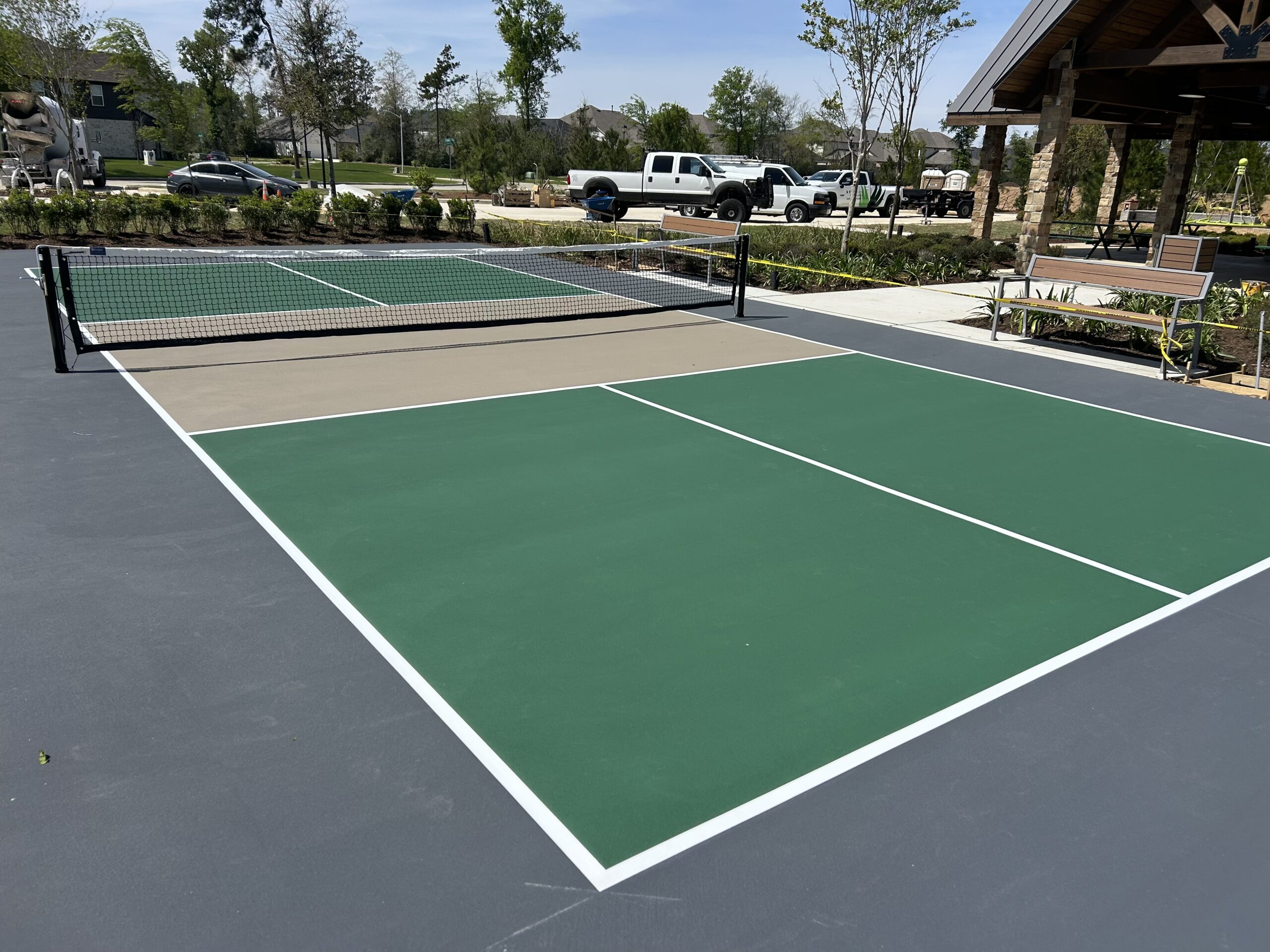
What Happens During Professional Pickleball Court Painting?
A lasting paint job begins well before the cans of paint are opened. The preparation is not the most noticeable part of the project, but it often determines how the finished surface will age.
The usual process includes:
• A close inspection: The contractor walks the surface and checks the coating, cracks, previous patches, drainage, line placement, and worn playing areas. This is the point where repainting may be ruled out in favor of repairs or resurfacing.
• A thorough cleaning: Leaves, pollen, dust, mildew, loose coating, and other buildup are removed. Paint cannot form a reliable bond over contamination.
• Necessary surface repairs: Repair methods depend on the court and the type of damage. Loose edges, suitable cracks, and minor worn areas should be addressed before the finish coats are installed.
• Preparation of the existing coating: Glossy or unstable areas may need additional work. The court must be clean and dry before painting begins.
• Application of the color coats: Acrylic court coating is installed in layers. Drying time is allowed between applications, and the weather is monitored throughout the process.
• Measurement and painting of the lines: The pickleball layout is checked before the lines are painted. Straight lines, square corners, and clean edges make a noticeable difference in the completed court.
• Drying and curing: The court may look ready before it is ready for shoes, nets, and regular play. Owners should follow the reopening time provided by the contractor.
Rushing any of these steps can shorten the life of the work. A fast coat over a poorly prepared surface may look fresh on day one and begin failing much sooner than expected.
Can Cracks and Low Spots Be Covered With Paint?
Paint adds color and texture. It does not repair a moving foundation, change the slope of a court, or fill a meaningful depression.
Cracks should be examined before painting. Some can be treated as part of normal maintenance, although continued movement beneath the court may cause them to return. A crack that keeps reopening needs a different conversation from a small, stable surface crack.
Low spots are also separate from painting. If a puddle remains after the rest of the court dries, adding another coat of color will not make the water go away. The low area or drainage issue needs to be addressed directly.
Peeling paint requires preparation too. New material will only be as secure as the layer beneath it. If that older layer is loose, it must be dealt with before the court is recoated.
Can You Choose New Colors When Repainting?
Yes. Many owners keep the existing color scheme, but repainting is a good opportunity to make a change.
A homeowner may want colors that work better with the house, fence, pool area, or landscaping. An HOA, school, or club may have established colors it wants to carry onto the court.
Looks are only part of the decision. Very dark colors absorb more heat. Pale colors may show dirt quickly or produce glare in certain light. The line color must remain easy to see against the playing areas.
For a two-color court, the kitchen can contrast with the rest of the playing surface. That makes the layout easier to read and can give the court a more finished appearance.
Courts with tennis, basketball, or other markings need extra care. Too many equally bold line colors can make the surface confusing. One layout should remain visually dominant.
How Can You Make the New Paint Last Longer?
There is no complicated maintenance ritual. Most of the work comes down to keeping the court clean and paying attention when something changes.
• Remove leaves, grass clippings, soil, and pollen before they collect in corners.
• Keep drains and nearby drainage paths clear.
• Clean spills with mild products suitable for acrylic court coatings.
• Avoid aggressive pressure washing and harsh solvents.
• Check the court after heavy storms or unusually cold weather.
• Keep heavy vehicles and sharp furniture legs off the surface.
• Look at repaired cracks occasionally to see whether movement has returned.
• Do not allow sprinklers to soak the court every day.
• Address small peeling areas before shoes and water enlarge them.
Trees near the court may provide shade, but they also shed leaves, sap, pollen, and small branches. The answer is not necessarily removing the trees. The court may simply need more frequent sweeping and occasional gentle cleaning.
Do Commercial Courts Need Painting More Often?
Usually, but not in every case.
A private court might host a few games during the week. A community, school, hotel, or club court may be active from morning until evening. More players mean more repeated foot traffic, particularly near the kitchen and baseline.
Commercial properties also need to think about presentation. A surface may still be playable but look worn enough to affect how visitors see the facility. For those properties, repainting may be scheduled before the coating reaches the end of its usable life.
There is still no universal commercial schedule. Usage records and regular inspections provide better guidance than selecting an arbitrary date every few years.
When Should Pickleball Court Painting Be Scheduled in Texas?
Painting can be completed during different parts of the year, provided the weather creates a suitable application window.
Spring and fall often bring comfortable working temperatures, although rain and humidity can interrupt the schedule. Summer work may be possible when the crew avoids the most intense heat and the product requirements are met. Some winter days are suitable too, but cold nights can affect drying.
Before work begins, the contractor should consider:
• The temperature of the court surface
• Rain in the upcoming forecast
• Humidity and overnight dew
• Drying time between coats
• Shade moving across the court
• Expected temperatures after application
A short delay caused by weather is frustrating, but coating a damp surface or racing an approaching storm is rarely worth the risk.
Frequently Asked Questions
Cost depends on the court’s size, access, number of colors, line layout, and current condition. Repairs, peeling paint, low areas, and heavy cleaning can add to the scope. A court that is sound and simply faded will generally require less work than one needing substantial preparation.
Yes, if the surrounding surface remains in good condition. Repainting the lines can improve visibility without changing the entire color system. If the court has become slick, badly faded, or patchy, line painting alone may leave the bigger issue untouched.
The reopening time depends on the coating, weather, humidity, and number of applications. A surface can feel dry while it is still curing. Wait for the contractor’s approval before returning nets, furniture, or players to the court.
They can, provided the surface is suitable and the layout allows enough room for play. Line colors should be carefully selected so that players can distinguish pickleball markings from tennis lines. Net placement and surrounding clearance also need to be considered.
Fading by itself is usually cosmetic. The concern grows when the court also feels slick, the lines are hard to see, or the coating has begun peeling. Standing water, open cracks, and loose material should also be evaluated.
No. Paint may cover the appearance of a repaired crack, but it cannot stop movement beneath the surface. Some cracks remain stable after treatment, while others reopen as the foundation or pavement moves. The crack should be evaluated before the court is painted.
Why Choose Quality & Heritage Court Services?
Quality & Heritage Court Services works with homeowners, HOAs, schools, clubs, hotels, and other commercial properties across Texas. Every painting project begins with the current condition of the court, not a preset package.
Clients can expect:
• A practical inspection before the work is priced
• Clear guidance on painting, repairs, or resurfacing
• Surface preparation based on the court’s actual condition
• Coatings intended for active outdoor play
• Careful color and line layout
• Experience with private and frequently used facilities
• Recommendations shaped by Texas weather and site conditions
If your lines are fading or the finish no longer feels right,contact Quality & Heritage Court Services. Our team can inspect the court and recommend a sensible path forward.