
Overview
When it comes to keeping an outdoor tennis court in peak playing condition, water is your absolute biggest enemy. True tennis court engineering isn’t just about pouring a flat pad and painting some lines; it is about controlling where the rainwater goes. A specialized, heavy-duty drainage system keeps water from pooling on your court, prevents acrylic paint from flaking off, and protects the massive concrete or asphalt foundation hidden just beneath.
If you ignore drainage, even a flawless, million-dollar court setup will slowly break down. Poor water runoff ruins player footwork, destroys your color finish, and forces you to deal with structural base failures long before the court should ever need work.
Why is water runoff so critical for a tennis court base?
Water works like a slow-motion drill, constantly trying to seep deep down into your court's structural foundation.
When rain has nowhere to go, it either collects beneath the slab or pools on top of the acrylic coat. Over time, that trapped moisture softens the subgrade soil, causing the heavy asphalt or concrete above to sag, warp, and crack. Making sure water leaves the court footprint immediately is the only way to keep your ball bounce true and preserve your financial investment.
What happens when rainwater pools on an acrylic court surface?
Puddles left sitting on an outdoor court do a lot more than just stall your game; they chemically attack the playing floor.
When water remains trapped in low-lying areas, it triggers a destructive process known as hydrostatic blistering. The hot sun bakes the standing puddle, turning that trapped water into a high-pressure vapor. This vapor forces its way into the acrylic layers, snapping the paint's chemical bonds and causing the surface to bubble, lift, and peel away in large chunks.
How does an engineered drainage plan extend your court's lifespan?
An outdoor tennis court is built to shed heavy downpours like a roof. When water instantly moves off the floor, it takes a massive amount of stress off the delicate acrylic binder.
By keeping the foundation dry and preventing moisture from settling into the stone base, you stop early shifting in its tracks. Pairing a solid drainage layout with seasonal checkups and basic cleaning can easily double the number of years you get out of your court before it needs a full, top-to-bottom resurfacing.
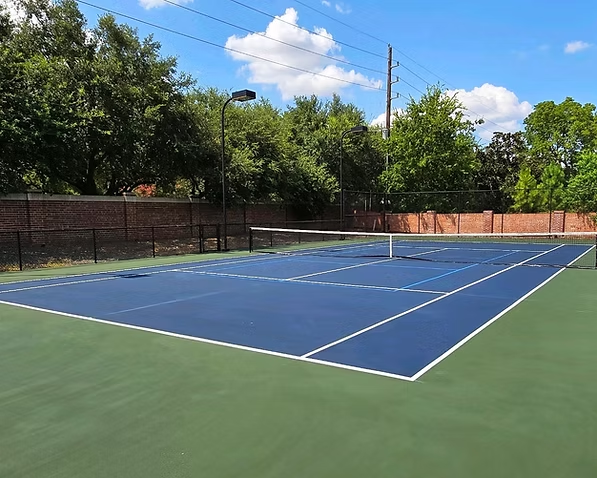
Can poor drainage compromise player safety?
Yes, slick spots and hidden damp zones are major liabilities in rapid, hard-court tennis matches.
When a court doesn't drain properly, it leaves behind thin, greasy sheets of moisture that are incredibly tough to spot from across the net. This ruins shoe traction right when a player plants their foot for a hard pivot or a lunging sprint, leading to slips, pulled muscles, and ankle rolls. A well-drained court dries uniformly within minutes of a storm, getting players back on the court safely.
Will a poorly drained court force you to resurface more often?
Absolutely. If your court is constantly fighting standing water, you will find yourself paying for major face-lifts way too often.
Water sitting on the floor acts like a magnet for dirt and grime, turning the court surface into a rough sandpaper grit that shears off the slip-resistant texture under players' sneakers. Instead of getting a smooth 4-to-8-year run out of your acrylic color system, poor drainage will cause early fading and cracking that cuts that lifecycle right in half.
How do crews build drainage into a court from day one?
True drainage engineering starts during the raw dirt phase, weeks before any asphalt or concrete is ever delivered to the property.
Precision Slope Grading: Operators use laser-guided blades to shape the subgrade dirt to a strict 1% slope on a single plane. This ensures rainwater naturally sheets off the lines instead of sitting in the court layout.
Perimeter Stone Swales: Crews dig deep gravel-packed French drains or stone swales right along the low edge of the pad. These channels capture the fast-moving runoff and safely route groundwater away before it can lift the slab edges.
Can routine maintenance spot hidden drainage flaws early?
Yes, catching drainage issues during a basic seasonal cleanup saves you from catastrophic repair bills later on.
During a routine walk-through, technicians can easily spot the telltale salt rings and water marks left behind by puddles that have disappeared. Finding these low spots or identifying clogged perimeter trenches early lets you perform targeted, low-cost patch repairs or level out minor "birdbaths" before the water has a chance to break through to the subgrade soil.
What are the warning signs that your court has a drainage problem?
Drainage issues rarely destroy a court overnight; instead, they leave behind clear warning signs that worsen with every passing storm:
• Persistent Damp Zones: Parts stay dark and wet for hours or days after the sun returns.
• Recurring Birdbaths: Puddles form consistently in baseline or service box areas.
• Peeling & Blistering Paint: Acrylic finish cracks, flakes, or lifts near damp edges.
• Slick Organic Growth: Algae, moss, or mold takes over shaded corners.
• Dead Ball Spots: Uneven bounces occur where water softened the sub-base.