
Overview
The actual cost of building a volleyball court depends heavily on whether you are paving a sleek indoor hardcourt or digging out a deep beach-sand pit. Because no two plots of land are identical, your total investment varies based on your property's soil stability, the surface materials you choose, and how much heavy dirt work is required before the court lines can be painted.
Whether you are budgeting for a private backyard setup, a schoolyard, a country club, or a major commercial tournament venue, breaking down the core engineering steps helps you allocate your funds effectively and avoid expensive surprises mid-build.
What are the biggest cost drivers behind a new court project?
Every volleyball court budget breaks down into two main categories: the invisible groundwork and the visible finish.
The baseline cost always includes clearing trees, leveling slopes, and installing proper drainage. If you are building on a perfectly flat, solid plot with easy road access, your budget will look vastly different from that of a project that requires heavy excavation, rock stabilization, or complex stormwater management lines. Once the ground is ready, the focus shifts to structural features such as commercial perimeter fencing, specialized net post sleeves, and custom spectator seating.
Is an indoor hardcourt more expensive to build than a beach sand court?
Indoor and beach courts use completely different engineering styles, which heavily impacts your bottom line.
Indoor Hardcourts: These builds generally require an existing climate-controlled building framework. The bulk of your budget here goes into high-end, shock-absorbing athletic wood floors or specialized multi-layer polymer cushion systems that protect players' joints during hard landings.
Beach Volleyball Courts: Instead of flooring, a beach court requires deep excavation, usually dug to a depth of up to 3 feet. The expense centers on laying down a complex web of perforated drainage pipes, wrapping the entire pit in heavy geotextile fabric to block mud, and trucking in tons of sub-angular, silica-free matrix sand that won't pack down or scrape a player's skin.
How does site preparation change the initial estimate?
Site preparation is the unglamorous foundation phase that dictates whether your court survives the elements or warps within two seasons.
Before any specialized court materials are ordered, operators must bring in heavy earth-moving equipment to strip topsoil, roll out root systems, and laser-grade the footprint. If your site holds groundwater or sits at the bottom of a slope, you will need to invest in deep French drains or rock swales. Spending the money early on structural soil compaction prevents the court from cracking, shifting, or turning into a muddy pond after a heavy downpour.
How does your choice of playing surface shift the price?
The material under a player's feet is one of the largest variables in your construction contract.
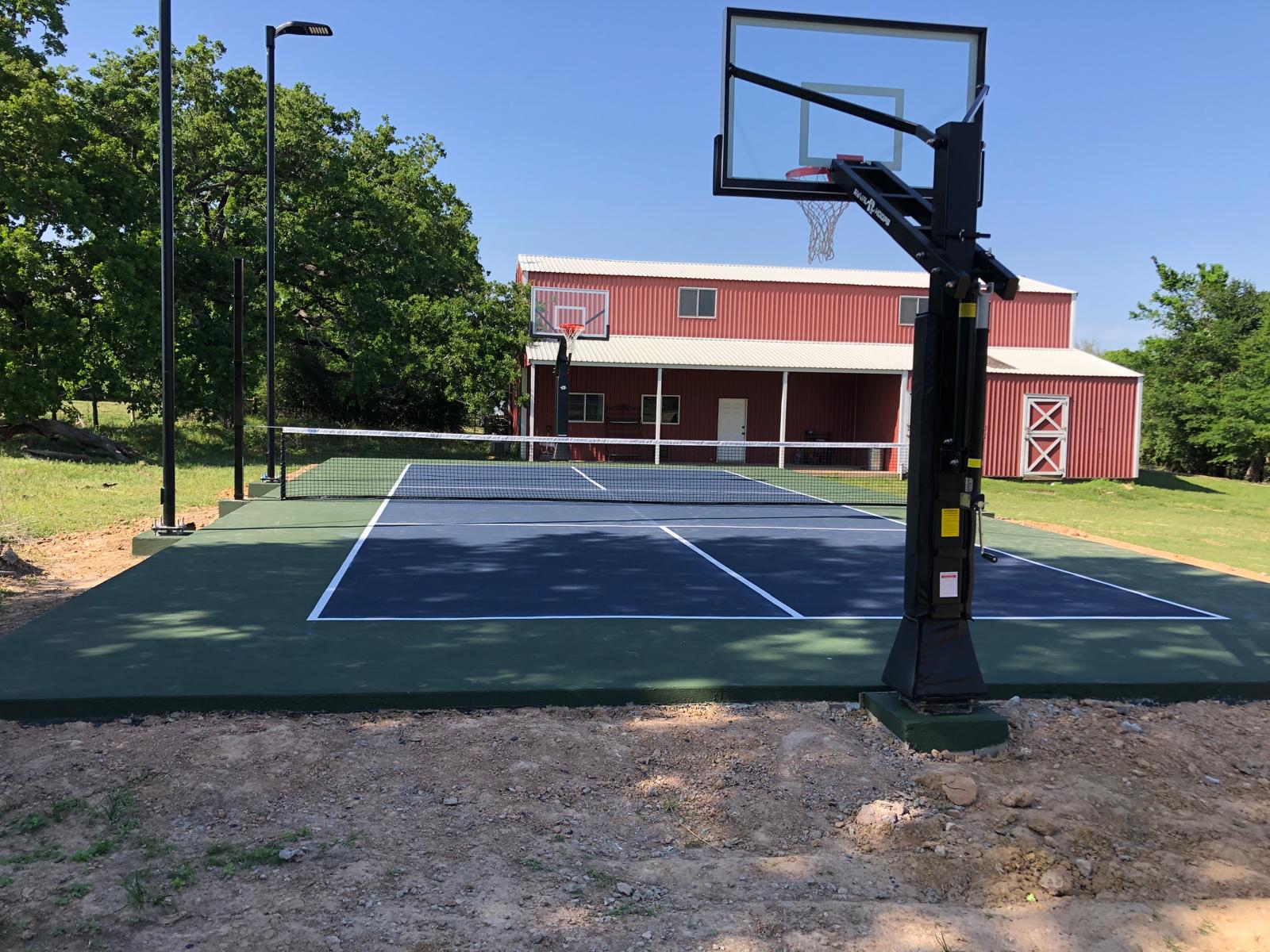
For an outdoor hardcourt, you are paying for a steel-reinforced concrete or hot-mix asphalt slab base coated in silica-fortified acrylic resins. For a premium indoor facility, the cost shifts to professional sports wood grading or seamless poured polyurethane mats. For a beach layout, you cannot use cheap playground sand; you must budget for premium washed sport sand that drains water instantly and stays fluffy in the hot sun. Each material requires distinct installation techniques and long-term care routines.
What extra features add up during the final phases?
If you want a court that handles nighttime tournament play or heavy weekend crowds, you need to budget for specialized finishing upgrades:
• High-Output LED Sports Lighting: Bolting commercial-grade light poles into independent concrete footings allows for nighttime play and eliminates blind spots when players look up for high sets.
• Heavy-Duty Net and Fence Enclosures: Professional-grade ground sleeves must be cast deep beneath the surface line so the net posts can handle tons of cable pull without bending inward over time.
• Spectator Zones: Adding custom team benches, low-maintenance spectator bleachers, pathways, and shade structures will enhance the user experience but will scale up your final construction costs.
Is it more cost-effective to build a multi-court complex all at once?
Yes, building two or four courts simultaneously always reduces the cost per square foot.
When you mobilize heavy excavators, laser-guided box blades, and concrete crews to a site, a massive chunk of the bill is simply getting the machinery and labor to the property. Doing the grading, drainage excavation, and base pours for multiple courts simultaneously allows you to maximize equipment runtimes and secure bulk-material discounts on sand, fencing, and acrylic coatings. This is why schools, park boards, and club owners almost always save money by expanding their plans upfront.
What is the best way to get a realistic budget for your layout?
The only way to lock down an accurate project estimate is to schedule a professional, on-site engineering check.
A seasoned court builder can pull topographic maps, test your soil type, check local zoning setbacks, and find hidden drainage bottlenecks before you sign a contract. Planning your budget around on-site field realities rather than generic online estimates ensures you build a top-tier facility that retains its value for decades.
Why should you hire a specialized sports builder instead of a general contractor?
Volleyball courts are specialized structural assets that demand zero tolerance for grading or material errors.
A regular paving contractor might build a flat driveway, but they don't understand the strict 1% single-plane slope required to sheet rainwater off an acrylic hardcourt without leaving dead-ball spots. Likewise, a basic landscaper won't understand the depth requirements and filter fabrics needed to keep beach sand from washing away into the dirt base. Investing in specialized sports engineering means your net stays perfectly tensioned, your floor stays flat, and your players stay safe.