
Overview
A Cushion X court surface is a cushioned system installed beneath an acrylic playing finish. It creates a better feel than a standard hard court while preserving the traction, ball response, and clean appearance players expect from an acrylic surface.
The cushioning sits between the concrete or asphalt base and the finished color coats. When a player lands, stops, pivots, or changes direction, the system absorbs part of the impact that would otherwise travel directly through a rigid court.
That difference is subtle enough to keep the court responsive but noticeable during a long match or training session. Cushion X can be used for tennis, pickleball, basketball, and multi-use courts.
Quality & Heritage Court Services installs Cushion X for private homes, schools, clubs, HOAs, hotels, and commercial facilities. Before recommending it, we consider the sport, frequency of play, existing foundation, player preferences, weather exposure, and project budget.
Thinking about a cushioned court? Contact our team for an on-site evaluation and a straightforward comparison between Cushion X and standard acrylic surfacing.
How Does Cushion X Work?
A normal acrylic court places the playing coats directly over a prepared concrete or asphalt base. Cushion X adds a resilient layer between those two surfaces.
The player still sees a seamless acrylic finish. Underneath it, the cushion helps soften repeated foot strikes and hard landings. This is particularly useful in games that involve quick stops, lateral movement, jumping, and frequent changes of direction.
The system does not turn the court into a soft gym mat. It retains the firmness needed for predictable ball bounce and controlled footwork. What changes is the amount of impact a player feels through the surface.
How Is Cushion X Different From a Standard Acrylic Court?
Both systems use acrylic color coats, but they do not feel the same beneath a player’s feet.
Standard Acrylic Courts: A standard acrylic surface is applied over a hard concrete or asphalt foundation. It provides reliable traction, clear game lines, and consistent ball response at a lower installation cost. For casual play or a project with a controlled budget, standard acrylic may be all that is needed. The surface is durable, customizable, and familiar to players across pickleball, tennis, basketball, and other court activities.
Cushion X Courts: Cushion X places a resilient cushion beneath the acrylic finish. The court still plays like a hard court, but the surface is less unforgiving during repeated running, landing, and pivoting. The extra material and installation work make Cushion X more expensive than standard acrylic. In return, owners gain a more comfortable playing experience without moving to turf, modular tile, or a noticeably soft surface.
The choice is not simply between good and better. It is about how the court will be used. A family court, which plays on a few evenings each week, has different needs from a busy club or training facility.
What Are the Main Benefits of Cushion X?
Cushion X is designed for owners who want the response of an acrylic court with more comfort beneath the surface.
• Less Impact From a Hard Base: The cushion creates separation between the player and the rigid concrete or asphalt below. Frequent players may notice the difference most during long sessions or back-to-back games.
• Consistent Ball Response: The acrylic finish maintains the familiar bounce required for tennis, pickleball, and basketball. The court feels cushioned underfoot without making the ball react unpredictably.
• Controlled Traction: The finished texture supports serving, sprinting, stopping, and lateral movement. Texture can be adjusted according to the sport and expected pace of play.
• Customizable Comfort: Thickness options allow the surface to be better matched to the facility and its players. A residential court may not need the same specification as a professional training venue.
• Color and Branding Options: The acrylic finish can include custom color zones, game lines, logos, school colors, or commercial branding.
These advantages only hold when the cushion, coating, and foundation are installed as a complete system. A premium surface cannot correct serious movement or drainage problems in the slab below.
Which Cushion X Thickness Should You Choose?
Cushion X is offered in 4 mm, 6 mm, and 8 mm thicknesses. Thicker does not automatically mean better. The right option depends on how the court should feel and who will use it.
• 4 mm Cushion X: The 4 mm option provides a firmer playing feel with a degree of cushioning beneath the acrylic finish. It may suit residential courts, lighter commercial use, and players who prefer a response closer to a traditional hard court.
• 6 mm Cushion X: The middle option offers a balance between firmness and comfort. It can work well for clubs, schools, HOAs, and private courts that will see regular play from people of different ages and skill levels.
• 8 mm Cushion X: The 8 mm system provides the greatest cushioning of the three options. It may be considered for high-use facilities, frequent training, or projects where player comfort is a leading priority.
The slab condition, sport, expected traffic, and surface finish should be reviewed before selecting the thickness. Choosing from a product sheet alone does not account for how the court will perform on the actual property.
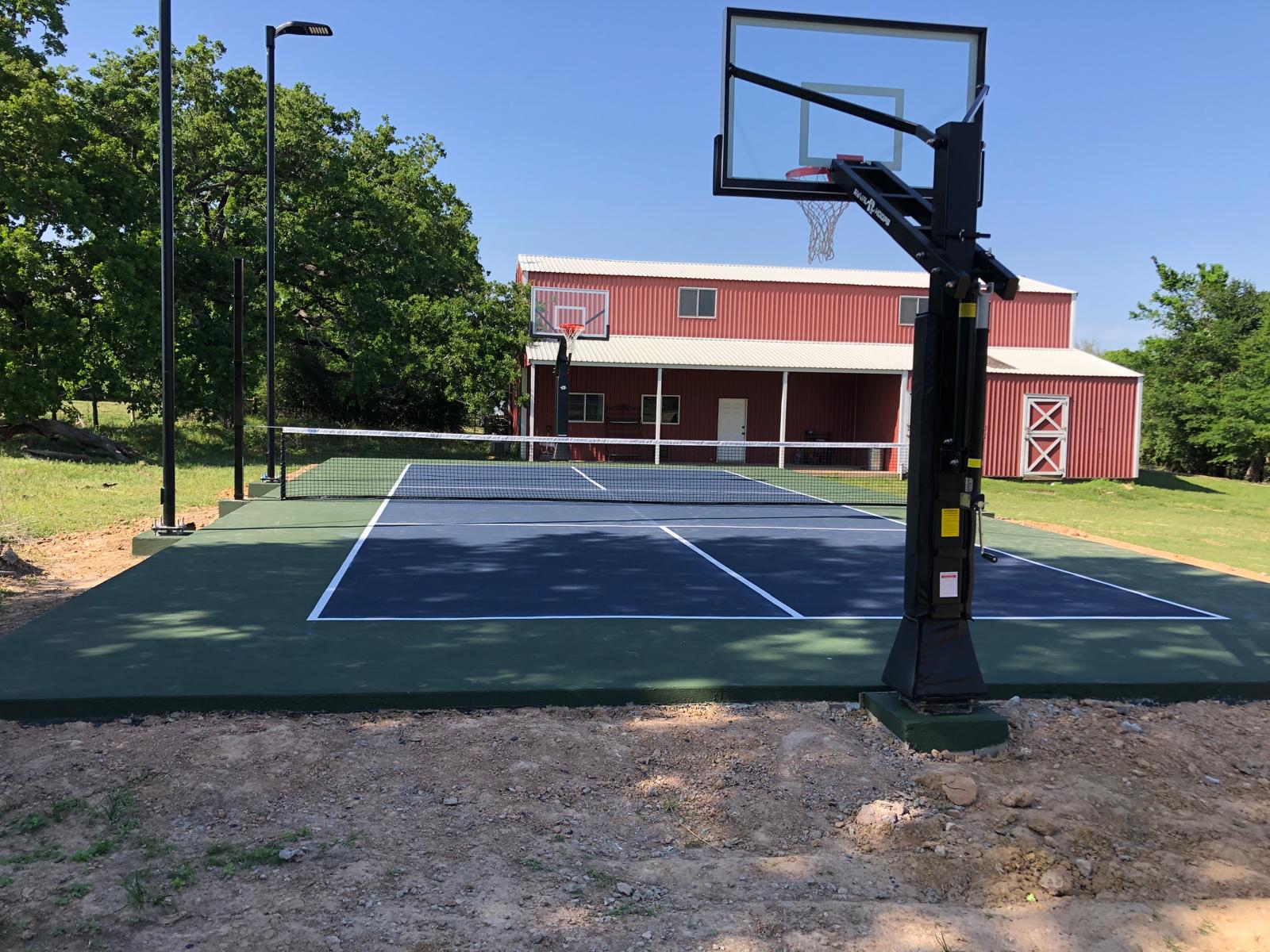
How Is a Cushion X Court Installed?
Installation begins long before the cushioning is placed. The foundation must be stable, clean, and properly prepared so that the system has a level surface to bond to.
1. Inspect and Prepare the Base: The concrete or asphalt is inspected for cracks, low spots, moisture, contamination, and drainage issues. Dirt, loose coatings, and failed material are removed.
2. Complete Necessary Repairs: Minor defects are treated before the cushion is installed. If the slab has significant structural movement, that issue must be understood first. Covering a serious problem does not make it disappear.
3. Install the Cushion System: The cushion is fitted across the playing area to create consistent coverage. Seams and transitions require careful attention because any unevenness can affect the finished surface.
4. Apply the Acrylic Coatings: Acrylic layers are installed above the cushion to create the playing texture and color. Weather conditions matter during outdoor installation because every coat needs time to cure correctly.
5. Paint the Game Lines and Details: Tennis, pickleball, basketball, or multi-use lines are measured and applied. Custom logos and color zones can be added at this stage.
6. Inspect the Finished Court: The completed surface is checked for texture, visual consistency, line accuracy, and overall finish before it is released for play.
The exact installation sequence can vary according to the foundation and project conditions. Quality & Heritage Court Services’ Cushion X overview explains how the surface is incorporated into a complete court build.
Which Sports Can Be Played on Cushion X?
Cushion X can support more than one game. Its acrylic finish can be customized with line markings for pickleball, tennis, basketball, or volleyball.
• Pickleball: Players spend much of the game starting, stopping, and changing direction within a compact area. Cushioning can make repeated kitchen-line movement feel less harsh.
• Tennis: A cushioned system supports baseline movement, serving, lateral recovery, and longer matches while maintaining the bounce of an acrylic hard court.
• Basketball: Jumping, landing, pivoting, and sudden stops place repeated impact on the lower body. Cushion X creates a more forgiving alternative to playing directly over a hard slab.
• Multi-Use Courts: A single surface can include lines for multiple activities. Line colors and equipment placement should be carefully planned so that the finished layout remains easy to understand.
The sport affects the coating texture, game lines, equipment, and preferred level of cushioning. Those decisions should be made before installation begins.
Who Is a Cushion X Court Best For?
Cushion X makes the most sense when the court will be used regularly, and comfort matters enough to justify a higher surface budget. A homeowner who plays several times a week may appreciate it more than someone adding a simple recreation area for occasional use. The same is true for a club that hosts lessons all day compared with a lightly used community court.
It can be a strong option for:
• Families with players from different age groups
• Private estates with premium recreation areas
• Pickleball and tennis clubs with regular programming
• Schools and HOAs serving many users
• Hotels and resorts offering higher-end amenities
• Commercial training and tournament facilities
A standard acrylic system may still be the more sensible choice when usage is light, or the budget needs to prioritize foundation work, drainage, fencing, or lighting.
Is Cushion X Suitable for Texas Weather?
Cushion X can be installed on outdoor Texas courts when the complete system is designed for local conditions. The acrylic finish provides color and playing texture, while the construction beneath must withstand heat, rain, and soil movement.
Strong UV exposure can fade low-quality coatings. Sudden rain exposes low areas and weak drainage. Expansive soil can move beneath the slab as moisture levels change.
For that reason, Cushion X should not be considered separately from the foundation. Post-tension concrete, proper grading, effective drainage, and outdoor acrylic coatings all contribute to how the finished court performs.
Installation timing matters as well. Acrylic products need suitable temperature and moisture conditions while they cure. Applying additional coats too quickly during high humidity can trap moisture and affect the finish.
A well-installed cushioned court still needs regular inspection. Texas weather continues to affect the property, even after a premium surface has been selected.
Can Cushion X Be Added to an Existing Court?
Possibly. An existing tennis, pickleball, or basketball court may be a candidate if the foundation is stable and the surface can be prepared correctly.
Before recommending an upgrade, the contractor should look for:
• Active or recurring cracks
• Low areas that hold water
• Peeling or incompatible coatings
• Drainage problems around the slab
• Structural movement or settlement
• Damage near net posts, goals, or fence lines
A worn color coat is usually easier to address than a moving foundation. If the existing damage is caused by the slab or surrounding soil, simply covering it may allow the problem to return.
The inspection determines whether Cushion X can be installed after surface preparation or whether the court needs more substantial repairs first.
How Much Does Cushion X Court Surfacing Cost?
Cushion X costs more than a standard acrylic surface because it adds a manufactured cushion layer and extra installation work. There is no useful flat price for every court.
The estimate will be shaped by the court size, cushion thickness, foundation condition, repairs, number of game lines, color design, logos, site access, and whether the project is a new build or resurfacing job.
A single residential pickleball court will not carry the same scope as a multi-court club or full basketball facility. An existing slab that needs extensive correction will also cost more than a clean, stable base.
When comparing estimates, ask what thickness is included, how the foundation will be prepared, which acrylic system will be applied, and whether repairs, lines, and custom details are part of the quote.
How Should a Cushion X Court Be Maintained?
Cushion X does not require complicated daily care, but the acrylic finish still needs attention.
Remove leaves, dirt, pollen, and grit before they become ground into the texture; clean spills and organic buildup with products and methods suitable for acrylic court surfaces.
After heavy rain, look for water remaining in the same areas. Recurring puddles can indicate blocked drainage or low spots that warrant inspection.
Fading is often cosmetic. Peeling, loss of traction, exposed material, open seams, or cracks should be reviewed before the damage spreads.
Nets, posts, goals, fencing, and lighting also form part of the court. A maintenance visit should not stop at the playing surface.
Frequently Asked Questions
It does not feel soft like carpet or loose rubber. The court still has the firm response of an acrylic surface, but the cushion beneath it takes some of the harshness out of repeated foot strikes and landings.
The system is designed to maintain consistent ball response for tennis, pickleball, and basketball. Proper installation is important because uneven seams or poor base preparation can affect the finished playing surface.
No. It can be considered for indoor or outdoor applications, depending on the foundation, chosen coatings, building conditions, and intended sport.
It may bridge or conceal some surface imperfections in the prepared surface, but it should not be treated as a cure for active structural movement. Recurring cracks and settlement need to be evaluated before the cushion is installed.
No. An 8 mm system offers more cushioning, but some players prefer the firmer feel of a thinner option. Usage, sport, player expectations, and budget should guide the decision.
Yes. The acrylic finish can be customized with color zones, game lines, logos, school colors, or commercial branding. The design should be finalized before the coating and line work begin.
Why Choose Quality & Heritage Court Services for Cushion X?
Quality & Heritage Court Services installs Cushion X as part of complete residential and commercial court projects.
• Court-Specific Planning: We consider the sport, players, slab, drainage, location, and expected use before recommending a system.
• Multiple Cushion Options: Thickness can be selected according to the desired balance between firmness and comfort.
• Texas Construction Experience: Outdoor courts are planned around heat, UV exposure, rain, drainage, and changing soil conditions.
• Complete Court Services: Our team handles construction, surfacing, painting, fencing, lighting, resurfacing, and ongoing maintenance.
Interested in Cushion X for a new or existing court? Contact Quality & Heritage Court Services today to schedule an on-site consultation and compare your surface options.