
Overview
The visible change can happen quickly. The preparation behind it should not.
Basketball court painting involves more than choosing colors and applying new lines. The existing surface must be cleaned, inspected, repaired where required, and prepared for the selected coating system. Lines must match the intended court layout. Colors must work in the actual setting, not just on a small sample.
Quality & Heritage Court Services provides basketball court painting for homes, schools, churches, HOAs, parks, universities, training facilities, hotels, municipalities, and commercial properties across Texas. We can renew faded surfaces, repaint regulation markings, update color combinations, and incorporate approved logos or custom graphics.
If your basketball court has faded color, worn lines, peeling coatings, stains, or an outdated layout, contact our team to schedule an inspection and painting estimate.
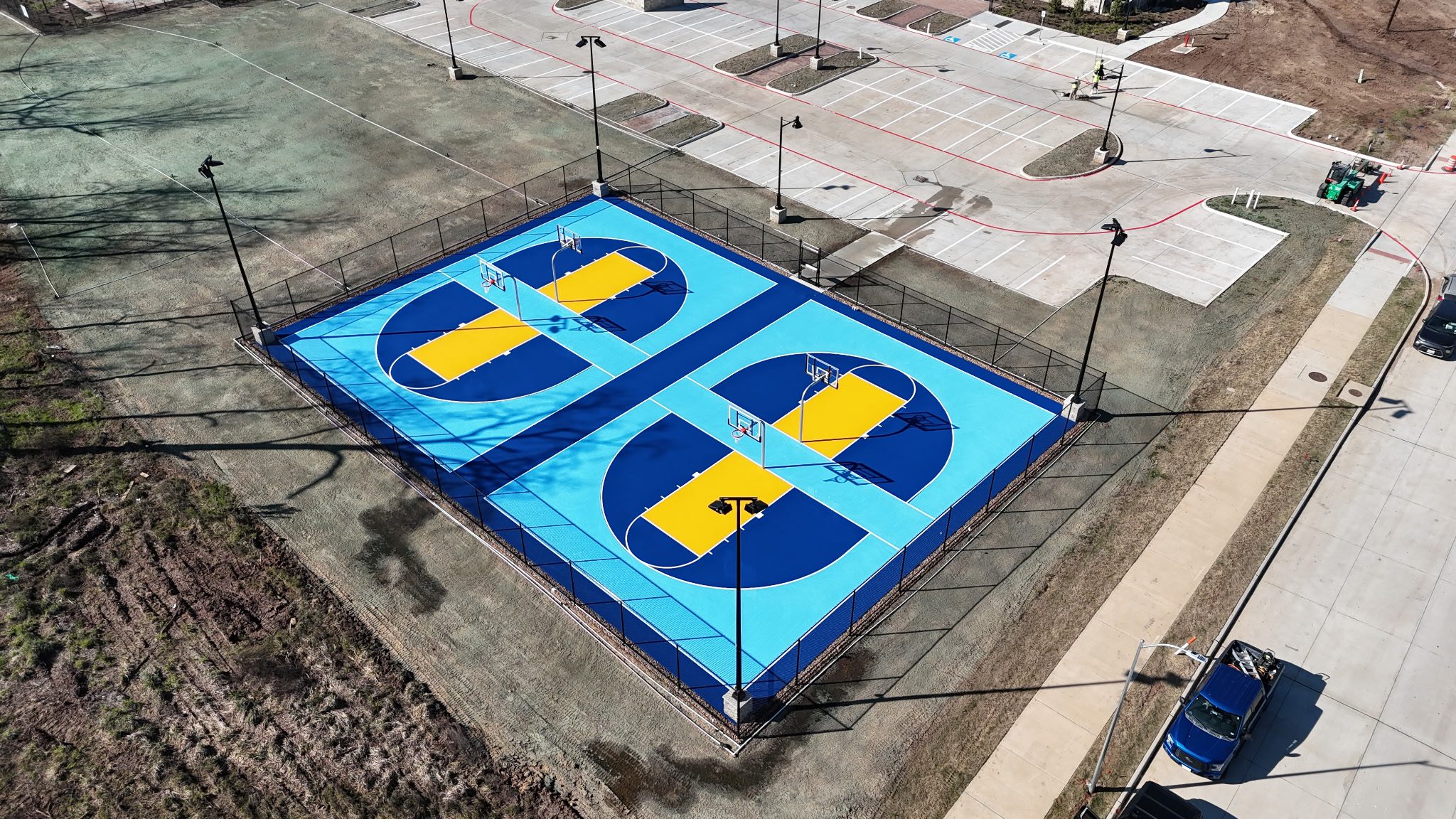
Court Painting Is More Than Applying Color
It is tempting to think of basketball court painting as a cosmetic project.
Appearance matters, but the coating also affects surface texture, traction, line visibility, and how the entire playing area feels underfoot.
Acrylic coatings are commonly used on suitable outdoor basketball surfaces. The system typically includes preparation, any repairs listed in the project scope, resurfacing material where needed, color coats, and line paint.
Each layer has a purpose.
The resurfacing layer helps create a more uniform foundation for the color system. Color coatings provide the visible finish and surface texture. Line paint defines boundaries, the key, the center circle, the three-point arc, the free-throw line, and other markings required for the selected layout.
Simply rolling paint over the existing court skips the most important questions:
- Is the old coating still bonded to the surface?
- Are cracks moving?
- Does water collect in low areas?
- Is dirt or organic growth trapped in the texture?
- Are the existing lines accurate?
- Is the current surface compatible with the proposed material?
- Do repairs need to happen before the finish is renewed?
The answers determine whether painting alone is appropriate or whether the court needs repair or resurfacing first.
Signs That a Basketball Court Needs Repainting
A basketball court does not have to be completely worn out before repainting makes sense.
Surface changes often appear gradually. Owners become accustomed to fading, dull lines, and discolored areas because they see the court regularly.
A closer inspection may show that the finish has aged more than expected.
The Color Has Faded Unevenly
Texas sun can be hard on outdoor coatings. One end of the court may receive stronger sunlight, while another sits near trees or buildings and remains shaded longer.
The result can be a patchy appearance rather than even fading.
Color loss does not always mean the underlying surface has failed. If the base and existing coatings remain stable, repainting or resurfacing may restore the finish.
The Lines Are Difficult to Follow
Boundary lines wear under foot traffic, cleaning, weather, and repeated use. The areas around the key, free-throw line, and three-point arc may fade sooner because players spend more time there.
Incorrect or unclear lines can also confuse players when the court is used under different standards.
Repainting creates an opportunity to check the layout rather than tracing old markings without verification.
High-Use Areas Look Polished
Basketball creates concentrated wear.
Players gather beneath the hoop, pivot around the key, move along the three-point line, and repeatedly approach from similar angles. Those patterns can make some areas appear smoother or more polished than the rest of the court.
A new coating system can restore more consistent color and texture when the underlying surface is suitable.
Old Repairs Show Through the Finish
Crack repairs and patches often become more visible as the surrounding color fades.
That does not always mean the repair has failed. Sometimes the coating above it has simply worn at a different rate.
If the repair remains stable, you can prepare the area and incorporate it into the new finish. If the crack has reopened or the patch has shifted, it requires another evaluation before painting.
The Court No Longer Fits the Property
A court may still be playable but look dated after changes to the surrounding home, school, facility, landscaping, or branding.
Repainting can update the color palette, simplify a crowded layout, add approved graphics, or create a better visual connection with the property.
Can Every Basketball Court Be Painted?
Not every surface is ready for paint.
The base, existing finish, moisture conditions, repairs, and intended use all affect what you can apply.
Outdoor concrete and asphalt courts may accept acrylic coating systems when they have been properly constructed and prepared. An indoor hardwood floor requires a completely different finishing process. Modular tile surfaces are not painted in the same way as acrylic pavement.
Bare concrete also needs careful evaluation. Concrete that appears clean may carry curing compounds, sealers, oil, moisture, or a finish that prevents proper adhesion.
Previously painted surfaces present their own questions. The new material needs to be compatible with the existing coating. Loose, peeling, chalking, or contaminated layers cannot provide reliable support for a fresh finish.
Before recommending basketball court painting, Quality & Heritage Court Services reviews:
- Surface material
- Existing coating condition
- Cracks and repairs
- Drainage and low areas
- Moisture concerns
- Previous products when known
- Surface texture
- Court use
- Desired colors and markings
- Surrounding conditions
The inspection helps determine whether the court needs painting, broader resurfacing, or repair before new coatings are applied.
Cleaning Is the First Real Step
A court can hold more dirt than it appears to.
Dust settles into the surface texture. Leaves break down near fencing and corners. Shoes carry in soil. Irrigation can leave mineral deposits. Shaded areas may develop algae or mildew. Gum, grease, rust, and other stains create separate problems.
New coating should not be applied over those materials.
Cleaning removes loose dirt and reveals the condition of the existing surface. Cracks, peeling areas, low spots, and failed repairs are often easier to see after the court has been washed.
The cleaning method must suit the surface.
Excessive pressure can damage an acrylic coating, loosen weak sections, or leave visible marks. Harsh chemicals may affect the finish or interfere with adhesion. The goal is to remove contaminants without creating new damage.
The court also needs enough time to dry before repairs or coatings begin.
A surface that feels dry on top may still hold moisture in cracks, depressions, or porous areas. Painting too soon can trap that moisture beneath the new system.
Cracks Cannot Be Hidden With Paint
A fresh color coat may make a narrow crack less noticeable for a while. It does not stop movement below the surface.
Cracks should be evaluated before painting begins.
Some are relatively stable and suitable for treatment. Others continue moving because of settlement, drainage, pavement failure, tree roots, or changes in the soil beneath the court.
Texas clay can expand and contract as moisture conditions change. That movement may place stress on outdoor concrete and asphalt surfaces.
The repair method depends on the crack’s width, depth, movement, location, and history.
No coating can guarantee that an active crack will never return. If the base continues moving, the crack may eventually become visible through the new finish.
Owners deserve to understand that possibility before work begins.
A painting proposal should state which repairs are included and which structural conditions fall outside the scope.
Low Areas Need More Than Another Coat
Standing water can leave stains, encourage organic growth, interrupt play, and speed up wear.
If the same puddle remains after nearby sections have dried, the court may have a low area.
Applying paint over that depression will not change its depth.
Small low spots may be suitable for patching or leveling as part of a broader resurfacing scope. Large depressions or continuing settlement may require deeper investigation.
The surrounding property also matters.
Water may be entering from a roof, driveway, slope, landscape bed, irrigation system, or neighboring pavement. Even a properly sloped court can struggle if outside runoff repeatedly crosses the playing area.
Drainage should be considered before the final colors are applied. Otherwise, a beautiful finish may spend its first season beneath the same recurring puddle.
Choosing Basketball Court Colors
Color selection is one of the most enjoyable parts of the project. It also deserves practical thought.
A combination that looks balanced on a screen may feel much stronger across a full-size court. Light, heat, surroundings, and line contrast can change how the colors appear.
A residential court may use restrained tones that work with the home, pool, patio, or landscape. A school may want its primary and secondary colors. A training facility may prefer a clean, high-contrast layout that looks clear on video. A commercial property may want colors connected to its broader branding.
Considerations include:
- Visibility of white or colored lines
- Contrast between the key and surrounding area
- Ball visibility
- Direct sunlight
- Reflected glare
- Heat absorption
- Dust and stain visibility
- Nearby buildings and landscaping
- Existing fencing and equipment
- Logos or custom graphics
Darker colors tend to absorb more heat in direct sunlight. Very light finishes may create glare or show dirt sooner. Bright combinations can look energetic, but too many competing colors may make the markings harder to follow.
Quality & Heritage Court Services helps owners compare colors in relation to the actual court rather than choosing them in isolation.
One Color or Several?
A basketball court does not need an elaborate design to look finished.
A single main color with contrasting lines can create a clean, understated appearance. A second color may be used inside the key, center circle, or playing boundary to make the layout easier to read.
More detailed designs can incorporate several zones, border colors, school branding, logos, or custom graphics.
The level of detail should suit the property and the way the court will be used.
A private backyard may benefit from a quiet palette that does not overpower the landscape. A school or university court may need stronger identity. A hotel or residential community may want something polished without making the space look overly busy.
The design should also account for future maintenance.
Complex graphics and multiple color fields can require more careful restoration when the surface is repainted again. That does not make them a bad choice. It simply belongs in the planning conversation.
Custom Logos and Graphics
A logo can make a basketball court feel connected to the people who use it.
Schools may want a mascot or initials at center court. Homeowners may prefer a family monogram or understated graphic. Clubs, hotels, and commercial properties may use approved brand elements.
The artwork must be prepared for a large surface.
Fine details that look clear on paper may become difficult to reproduce or maintain. Very thin lines, small text, complex shading, and subtle color differences may not translate well to pavement.
A successful court graphic usually has:
- Clear shapes
- Strong contrast
- Appropriate scale
- Colors suited to the coating system
- Placement that works with the playing lines
- Enough simplicity to remain readable from a distance
The condition of the surface beneath the artwork matters too. A logo will not hide peeling coatings, cracks, or rough repairs.
Graphics should be planned before color application so their size, location, and relationship to the lines are clear.
Outdoor and Indoor Painting Are Different Projects
Outdoor basketball courts deal with rain, sun, heat, dust, tree debris, irrigation, and changes in the pavement. Coatings must be selected and applied for those conditions.
Weather affects the installation schedule. Acrylic systems need suitable temperature, moisture, and drying conditions. Rain, high humidity, wind, and extreme heat can interrupt work.
Indoor floors face different demands.
Hardwood may require sanding, sealing, game-line paint, logos, and compatible finish coats. Existing finish condition, ventilation, dust control, facility access, and curing time all become important.
Indoor concrete may use another system depending on the building, moisture conditions, and intended use.
The same product and process should not be assumed for every basketball court. Surface material and location determine the appropriate approach.
How Basketball Court Painting Is Completed
The details vary, but the order of work remains important.
We Inspect the Existing Surface
We review the court material, coating condition, cracks, low areas, drainage, repairs, markings, hoop location, access, and surrounding property.
We also ask how the court is used. A family half court does not have the same traffic or layout needs as a school or busy training facility.
We Confirm the Scope and Design
Colors, line standards, graphics, repair work, and any resurfacing layers are discussed before application begins.
This is also the time to decide whether the existing layout will remain or be corrected.
We Clean and Prepare the Court
Dirt, loose material, stains, and organic growth are removed. Peeling or poorly bonded areas receive additional preparation.
The court is allowed to dry before the next stage.
We Complete Included Repairs
Cracks, low spots, and damaged areas listed in the scope are treated using methods suited to their condition.
The repair should blend with the surrounding surface as closely as practical. Structural movement and major base failure require a separate discussion.
We Apply the Surface System
Resurfacing material and color coatings are applied according to the selected system.
Each layer needs appropriate drying time. Application conditions can affect texture, color consistency, and adhesion.
We Measure and Paint the Lines
The layout is measured using the selected standard and the basket location.
Lines, logos, and approved graphics are applied after the color surface is ready.
We Inspect the Finished Court
Before handover, we check color consistency, texture, markings, graphics, repairs, drainage areas, and the surrounding work zone.
The court remains closed until the coating has cured sufficiently for play.
Have a faded or outdated basketball court? Request a painting estimate from Quality & Heritage Court Services.
How Long Does Basketball Court Painting Take?
The timeline depends on the court’s size and condition.
A small residential half court with a stable surface and simple design may move faster than a full court requiring repairs, several colors, detailed graphics, or multiple layouts.
Preparation often takes more time than owners expect.
Cracks and low areas need attention. Peeling coatings may need removal. The surface must dry after cleaning. Each coating layer requires time before the next can be applied.
Weather can extend an outdoor schedule.
Rain is the most obvious concern, but humidity, wind, surface temperature, and extreme heat can also affect application and curing. A dry-looking court may not be ready if moisture remains within cracks or patched areas.
Indoor projects avoid rain but may require coordinated closures, ventilation, dust control, and longer curing before equipment returns.
The most reliable schedule is provided after the court and proposed design have been reviewed.
What Affects Basketball Court Painting Cost?
Court dimensions matter, but they are only the beginning.
Two courts of the same size can require very different scopes. One may need cleaning and a straightforward color renewal. Another may have peeling coatings, cracks, low areas, an inaccurate layout, and several graphics.
Cost can be influenced by:
- Court size
- Surface material
- Existing coating condition
- Cleaning and preparation
- Crack treatment
- Low-area correction
- Number of resurfacing and color layers
- Number of colors
- Line layout
- Logos and custom graphics
- Indoor or outdoor location
- Site access
- Weather-related scheduling
- Amount of masking and detail work
A detailed estimate should separate preparation, repairs, surface coatings, line painting, and custom design work.
That allows the owner to understand what is included instead of comparing two prices that may represent very different projects.
What to Do After the Court Is Painted
A newly painted court needs time before it is ready for players.
The surface may feel dry to the touch while the coating is still curing. Shoes, balls, portable hoops, benches, and maintenance equipment can leave marks if they return too soon.
Follow the reopening instructions provided for the selected system and site conditions.
After the court returns to use:
- Keep leaves and loose debris from collecting
- Clean spills promptly
- Avoid dragging benches, goals, or equipment
- Use appropriate cleaning products
- Keep irrigation away from the playing area
- Watch for water that remains after rain
- Inspect cracks and repairs periodically
- Protect the surface from sharp furniture legs
- Use suitable wheels on portable equipment
- Address damaged areas before they spread
Aggressive pressure washing can harm the coating if the equipment is too powerful or held too close to the surface.
Schools, clubs, and commercial facilities may benefit from a simple inspection schedule. Regular notes about cracks, drainage, line wear, and surface condition can make future maintenance easier to plan.
Quality & Heritage Court Services provides basketball court maintenance for properties that need ongoing cleaning, inspection, repair, or surface care.
Why Quality & Heritage Court Services?
A painted basketball court should perform as well as it looks.
We Begin With the Existing Surface
The court is inspected before colors are selected. That helps identify preparation and repair needs that would otherwise remain beneath the new finish.
We Treat the Layout as Part of the Project
Lines are not decorative borders. They define the game. We confirm the intended standard and measure the layout rather than assuming the old markings are correct.
We Explain the Limits of Painting
Paint can renew color and markings. It cannot stabilize moving pavement, correct major drainage failure, or permanently hide active cracks. We make those distinctions clear.
We Plan Colors for the Actual Property
Sunlight, surrounding buildings, landscaping, fencing, equipment, and branding all influence how a design will look at full scale.
We Can Continue Caring for the Court
Painting is not the end of the court’s life. Cleaning, inspection, repairs, and future resurfacing remain important. Our team can support the surface as it ages.