
Overview
Most tennis court owners want a simple number when they begin looking at resurfacing.
The difficulty is that no two courts arrive at the estimate in the same condition. One may need cleaning, fresh color, and new lines. Another may have cracks, low areas, peeling coatings, drainage trouble, or pavement movement that must be addressed first.
The surface type, size of the court, number of colors, access to the property, and amount of repair work all affect the final cost.
Tennis court resurfacing is generally less extensive than a complete rebuild, but it is still more than applying new color over an old surface. The base must be inspected and prepared so the new system has a suitable surface to bond to.
Quality & Heritage Court Services resurfaces and repairs tennis courts for homes, schools, clubs, communities, municipalities, resorts, and commercial properties across Texas.
If your court is faded, cracked, uneven, or holding water, contact our team for an inspection and detailed estimate.What Does Tennis Court Resurfacing Include?
Resurfacing usually renews the visible playing surface while retaining a base that remains structurally usable.
The exact scope varies, but a project may include:
• Surface cleaning
• Removal of loose coating
• Crack treatment
• Low area patching
• Minor pavement repairs
• Resurfacing coats
• New color
• Line repainting
• Net post or equipment adjustments
• Final inspection
The court needs to be clean, dry, and sound before new materials are installed.
The USTA Tennis Venue Services guidance distinguishes resurfacing from reconstruction. Resurfacing can improve an existing court when the structure and drainage remain serviceable. Major structural cracking, improper drainage, or base failure may require deeper work.
What Is the Typical Cost to Resurface a Tennis Court?
There is no responsible flat price without seeing the court.
A basic resurfacing project may cost considerably less than one requiring extensive crack repair, drainage correction, coating removal, or pavement work. The number of courts also affects the estimate, but it does not tell the whole story.
Two courts of the same size can need very different preparation.
The estimate should explain the difference between:
• Surface preparation
• Repairs
• Resurfacing materials
• Color coats
• Line painting
• Equipment work
• Additional site improvements
When comparing quotes, check whether each contractor has included the same items. A lower number may leave out crack treatment, low area correction, line repainting, or preparation.
What Conditions Increase Resurfacing Cost?
The condition of the base is one of the biggest cost factors.
Cracks
Stable surface cracks may be treated as part of preparation. Moving or raised cracks need more involved work and may return if the pavement beneath them continues to shift.
Low Areas
A shallow depression may need patching before the final coating. A larger area with settlement or poor drainage may require pavement correction.
Peeling or Loose Coating
Loose material must be removed rather than covered. If the failure is widespread, preparation can take a substantial amount of time.
Drainage Problems
A new coating will not make water leave a court that has an incorrect slope or blocked drainage. The source of the water may need to be corrected first.
Pavement Movement
When the base has settled, heaved, or developed widespread structural cracks, resurfacing alone may not be suitable.
The USTA resurfacing and facility assistance information recognizes that existing courts can require repair, overlay work, or reconstruction depending on their condition.
Does Court Size Affect the Price?
Yes. A larger playing area requires more cleaning, preparation, coating, and line work.
The number of courts matters as well. A multi-court project may offer some efficiency in mobilization and material delivery, but each court still needs individual inspection.
One court may have more cracking or a different drainage problem from the others.
The surrounding area also affects access. A backyard court behind narrow gates may require more careful movement of equipment and materials than a facility with direct vehicle access.
Does the Surface Type Change the Estimate?
It can.
Acrylic hard courts, cushioned systems, and clay surfaces have different preparation and maintenance requirements.
Acrylic Hard Courts
Acrylic resurfacing typically involves cleaning, repairs, resurfacing layers, color coats, and lines over a suitable asphalt or concrete base.
Cushioned Courts
A cushioned system includes resilient layers beneath the acrylic finish. If the cushion is still bonded and consistent, the work may focus on the upper surface. Damaged or separated cushion layers require a deeper assessment.
Quality & Heritage Court Services provides Cushion X court systems for owners considering a more forgiving surface.
Clay Courts
Clay courts are maintained differently from acrylic courts. Resurfacing or rebuilding may involve the material layers, grading, drainage, lines, and specialized finishing.
The existing surface should be identified before an estimate is prepared. A contractor should not assume that every tennis court can be treated with the same coating system.
How Much Do Colors and Lines Add?
Color and line work are part of the finished appearance and playing experience.
Some owners restore the existing palette. Others change the court colors to suit the property, club identity, school branding, or surrounding landscape.
Cost may change with:
• Number of surface colors
• Color changes across the court and outside area
• Custom logos
• Additional youth lines
• Pickleball or other markings
• Removal or covering of old lines
• Complex line layouts
The new lines should be measured rather than copied from faded markings. Incorrect old lines can be carried forward if they are not checked.
Our tennis court painting services include color application, line repainting, and updated layouts.
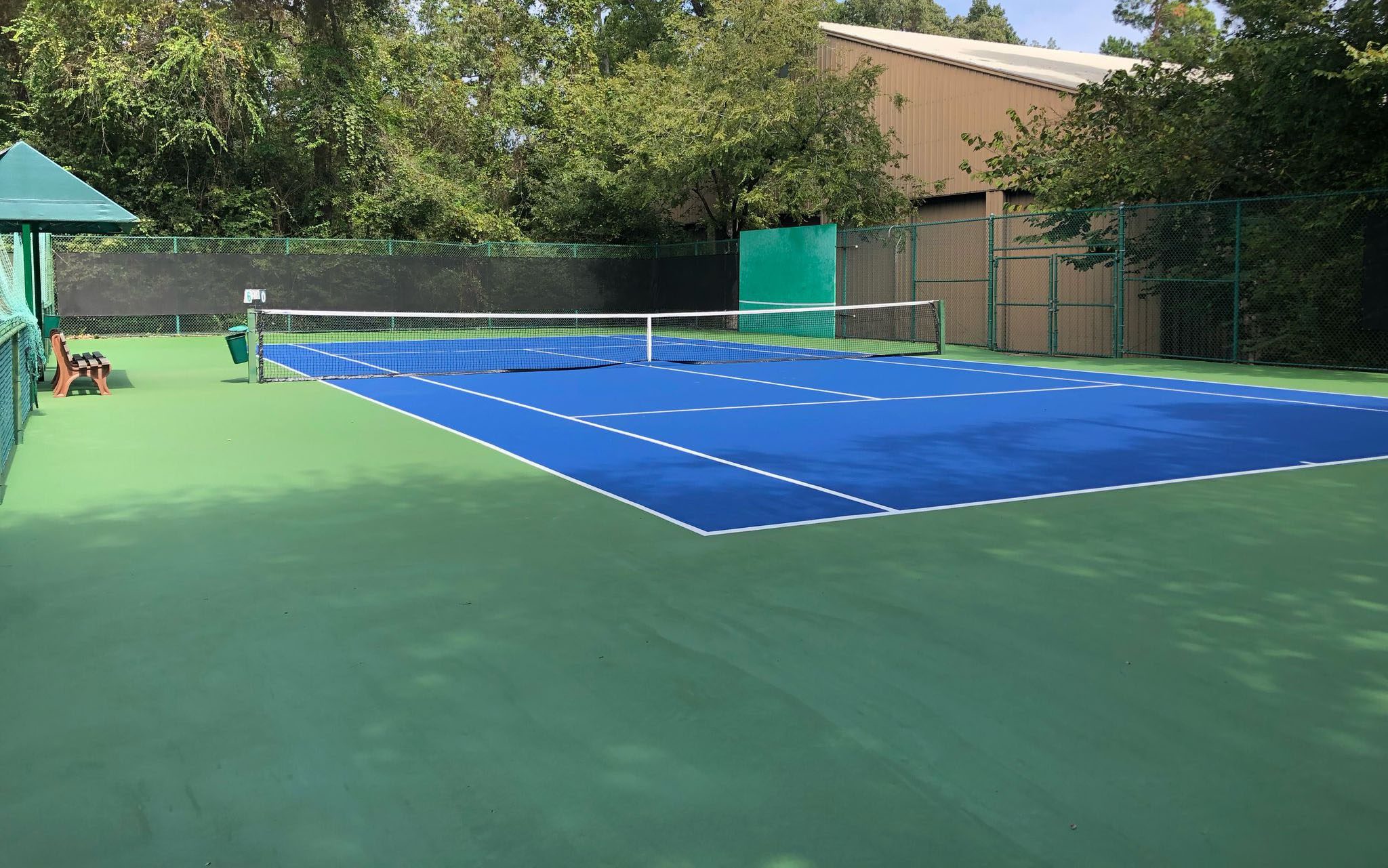
Does Drainage Work Cost Extra?
Drainage work is usually separate from ordinary surface coating because it involves the base or surrounding property.
A puddle may come from:
• A low spot
• Settlement
• Poor court slope
• Blocked drainage
• Runoff from higher ground
• Irrigation
• Nearby roofs or pavement
A shallow low area may be corrected during preparation. Broader drainage trouble may need grading, collection channels, discharge improvements, or pavement reconstruction.
Leaving the cause untouched can shorten the life of the resurfacing work. Water that continues to collect will eventually affect the coating again.
Texas courts should be planned for both long dry periods and sudden heavy rainfall. Drainage around the court matters as much as the surface inside the fence.
How Does Access Affect the Estimate?
The crew needs to reach the court with cleaning equipment, repair materials, coating supplies, line machines, and other tools.
Access may be affected by:
• Narrow gates
• Long driveways
• Steps
• Slopes
• Pool areas
• Landscaping
• Walls
• Low branches
• Limited storage space
• Distance from vehicle access
Difficult access does not necessarily prevent resurfacing, but it can add labor and time.
The owner should tell the contractor about access limitations before the proposal is prepared. Surprises on the first day can affect both the schedule and price.
What Happens During a Tennis Court Resurfacing Project?
A clear process helps the owner understand what the estimate covers.
Inspection and Scope
The court is reviewed for cracks, low areas, peeling, fading, drainage, surface texture, edge damage, and equipment concerns.
Cleaning and Preparation
Dirt, leaves, algae, loose coating, stains, and other contaminants are removed. The surface must be clean enough for repairs and coatings to bond.
Repairs
Cracks, low areas, damaged sections, and other agreed repairs are completed according to their condition.
Resurfacing
The selected resurfacing and color coats are applied in stages. Weather and drying conditions affect the timing.
Line Painting
Once the surface is ready, the layout is measured and the tennis lines are applied. Additional markings can be discussed before work begins.
Final Review
The finished court is checked for color consistency, texture, line placement, net alignment, transitions, and general appearance.
The court remains closed until the materials have cured sufficiently for shoes and equipment.
How Long Does Tennis Court Resurfacing Take?
A straightforward project may move faster than one requiring extensive repairs.
Cleaning, crack treatment, coating applications, line work, and curing each take time. Weather can extend an outdoor schedule, particularly during rain, high humidity, strong wind, or extreme heat.
A court should not reopen simply because the surface looks dry. Coatings may need additional time before they can handle play, benches, nets, or maintenance equipment.
The contractor should provide a schedule after inspecting the court and identifying the surface system.
Is Resurfacing Better Than Rebuilding?
That depends on the base.
Resurfacing may be appropriate when the pavement is stable, drainage works, and the main problems involve fading, worn texture, old lines, or manageable surface defects.
A rebuild may be more appropriate when the court has widespread settlement, major structural cracks, severe drainage trouble, or a base that has lost stability.
A new finish cannot correct a moving foundation. It can only perform as well as the surface beneath it.
Our tennis court resurfacing services begin with evaluating whether the existing court can support resurfacing.
How Can You Compare Resurfacing Quotes?
Read each quote closely.
A useful proposal should state:
• What preparation is included
• Which cracks and low areas will be repaired
• How loose coating will be handled
• Which materials and colors are proposed
• How many coats are included
• Whether lines and graphics are included
• Whether equipment work is included
• What access assumptions apply
• What weather or site conditions could change the price
• What is excluded
A quote that says resurfacing without describing preparation leaves too much unclear.
Ask whether the price covers the complete court or only the painted playing area. Fencing, drainage, lighting, net posts, and surrounding pavement may be separate.
How Should You Budget for Future Maintenance?
Resurfacing is not the end of the court’s maintenance needs.
Outdoor tennis courts collect dirt, pollen, leaves, and moisture. Lines fade, coatings wear, drainage routes become blocked, and small cracks can expand.
Routine care may include surface cleaning, drainage checks, crack monitoring, line inspection, net post checks, and occasional repairs.
Quality & Heritage Court Services provides tennis court maintenance for homes, schools, clubs, communities, and commercial properties.
A maintenance plan can help the owner find small changes before they require more extensive work.
What Should Texas Owners Consider?
Texas heat and sunlight can accelerate color fading and surface wear. Sudden storms test drainage. Expansive soil can move the pavement. Irrigation, trees, dust, and shade also affect how a court ages.
The local site matters.
Owners in Houston may need to give particular attention to water management. Properties in Austin, Dallas, and San Antonio may have different combinations of soil, slope, access, and drainage.
The resurfacing plan should be based on the court’s actual condition and exposure.
What Are the Most Common Questions About Tennis Court Resurfacing Cost?
The price depends on court condition, size, access, surface type, repairs, number of colors, line work, and drainage. A reliable figure requires an inspection and written scope.
It can be, when the base and drainage remain suitable. If the pavement has major movement, widespread cracking, or serious drainage failure, rebuilding may be more practical than resurfacing.
It can, but the proposal should state which cracks are included and how they will be treated. Active or raised cracks may require deeper work and can return if the pavement continues moving.
Line painting is affected by the number of lines, surface preparation, old markings, color changes, additional layouts, and court access. It may be included with resurfacing or priced separately.
Service life varies with the base, surface system, weather, playing volume, drainage, cleaning, and maintenance. Texas sun and heavy rain can affect wear, so regular inspection matters.
Closure depends on preparation, repairs, coating stages, weather, and curing. The court should remain closed until the contractor confirms that the surface can handle play and equipment.
Why Should You Choose Quality & Heritage Court Services?
Inspection Before Pricing
The court is reviewed before the scope is recommended, so visible fading is not mistaken for the only issue.
Clear Separation Between Repair and Resurfacing
Owners are shown which work addresses the surface and which conditions may require deeper correction.
Complete Surface Support
Quality & Heritage Court Services can coordinate cleaning, crack repair, resurfacing, color, lines, equipment, and ongoing maintenance.
Texas Experience
Heat, rain, soil movement, irrigation, and site access are considered when the project is planned.
Ready to find out what your tennis court needs? Contact our team to schedule an inspection.