
Overview
Over time, daily match play, baking heat, freezing temperatures, and heavy rainfall run down even the highest-quality layouts. Outdoor courts quickly accumulate slick coatings of dirt, mold, and airborne grit, while wind loads and high net tension impose immense mechanical strain on your perimeter hardware. Ignoring minor surface wear or loose posts early on changes ball bounce dynamics, ruins player traction, and opens the door to devastating subfloor damage.
At Quality & Heritage Court Services, we provide straightforward, realistic tennis court maintenance plans for private residences, homeowners associations (HOAs), schools, and commercial tennis clubs to keep your facilities safe and tournament-ready all year.
Want to spot minor surface flaws before they turn into an expensive capital expense? Connect with our team today for a transparent maintenance quote.
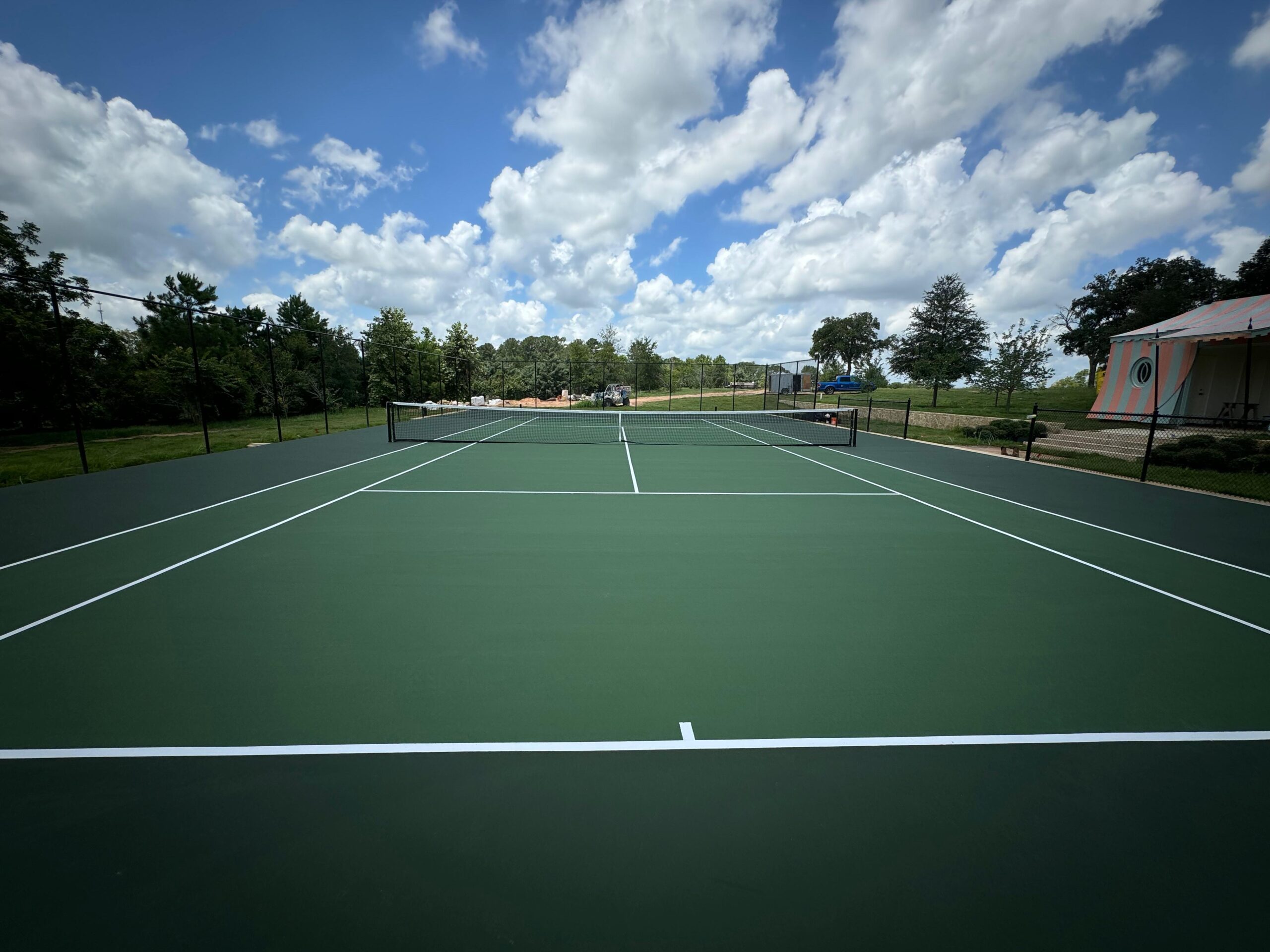
What’s Included in a Tennis Court Maintenance Services Plan
We don't believe in cookie-cutter packages or generic checklists. A private backyard court surrounded by oak trees handles structural wear entirely differently than a sun-baked multi-court commercial complex. Our crew closely examines the specific mechanical stress points that threaten your court's safety and playability.
Deep Surface Cleaning & Traction Tuning
A slick, dirty court is an immediate liability for injury. We focus heavily on restoring absolute grip to the playing floor.
Debris and Silt Removal: We clear away leaves, pine needles, pollen, and embedded grit that trap standing moisture, foster mold growth, and grind down protective acrylic textures.
Texture Preservation: Regular clearing prevents raw foot traffic from turning surface dirt into an abrasive sandpaper film, preserving the original slip resistance of your color coat between resurfacing cycles.
Field Inspections & Structural Tune-Ups
We look closely at the high-stress points that pull apart under constant play.
Spotting Slab Damage: We walk the entire floor to catch early hairline cracks, peeling acrylic layers, low depressions, or boundary lines that are starting to fade from heavy foot traffic.
Net Post and Winch Stress Tests: Keeping a tennis net at exact regulation height requires immense cable tension, which puts a massive, continuous pull on your ground hardware. We test the posts, internal winches, and anchor straps to ensure the metal components aren't fatigued, leaning inward, or buckling under strain.
Tracking Water Runoff: Rain isn't just an outdoor nuisance; it’s a structural threat. We track how water sheds off the concrete or asphalt pad to identify the exact low spots where silt and standing puddles collect, which eventually destroys the color coat.
Hardening Perimeter Hardware: Worn-out hookups, loose fence gates, and frayed windscreens put players and spectators at risk. We inspect the structural frame hardware, tighten loose connections, and service court accessories right on the spot.
Spot Maintenance & Preventive Action
Tackling minor concrete or asphalt flaws while our tools are already unboxed prevents minor structural aging from becoming an unmanageable capital expense.
Fixing Chips and Lines: We patch up localized surface pitting and touch up worn boundary lines before micro-damage creeps across the entire floor.
Sealing Out Subfloor Moisture: Getting ahead of hairline surface cracks helps prevent rain from seeping beneath outdoor asphalt or concrete slabs. This completely prevents the severe winter freeze-thaw cycles that bubble acrylic finishes and snap the underlying concrete substrate.
What Regular Upkeep Actually Saves You
Taking care of a sports venue is direct damage control for an expensive physical asset.
Pushes off massive resurfacing bills
Regular cleaning and proactive crack sealing stop raw traffic from grinding the color coat down to bare concrete. This adds years to the pad before you ever have to write a check for a full restoration.
Cuts down player injuries
You eliminate the slick dust films, uneven slab joints, and organic mold growth that cause players to slip, trip, or roll ankles during intense baseline rallies.
Guarantees an honest game
Keeping abrasive grit off the floor and keeping the net tension locked down tightly ensure predictable player traction, true ball bounces, and official regulation-play conditions.
Protects broader budgets
Spending a little time tightening hardware and clearing drainage channels today prevents subfloor rot and slab shifting from becoming a sudden five-figure emergency repair down the road.
How Often Should Your Court Be Serviced?
How often our crew needs to step onto your court depends entirely on how many matches you host, nearby landscaping, and whether the facility is open to the elements.
| Venue Type | Recommended Service Schedule |
|---|---|
| Private Estates & Residential Courts | Annually or Semiannually |
| Homeowners Associations (HOAs) | Quarterly (Every 3 Months) |
| Schools, Colleges, & Universities | Quarterly (Every 3 Months) |
| Commercial Tennis Clubs & Facilities | Quarterly (Every 3 Months) |
| Municipal Complexes & Public Parks | Custom High-Frequency Plan |
Field Indicators That Your Facility is Struggling
Don't wait for a net anchor to snap or a player to slip to take action. Keep an eye out for these clear warning signs:
Main boundaries are fading away
When lines start to disappear under heavy scuffing or outdoor UV exposure, it means the underlying protective coating has worn thin.
Surface splits are catching water
Even tiny chips or hairline cracks trap moisture. Once winter freezing hits, that trapped water expands, popping the concrete substrate wide open.
Puddles linger for hours after rain
Standing water indicates that your concrete slope has settled unevenly or your perimeter drainage channels are completely backed up with silt.
Nets sag and posts lean inward
If the tension won't hold, or the net posts visibly tilt when cranked, your internal grounding sleeves or anchors are failing under strain.
High-traffic baseline zones are wearing down
Noticeable discoloration or thinning of the texture at the baselines means you need to spot-repair immediately before the asphalt beneath is exposed.
Tennis Court Maintenance Process: How We Work
The Walkthrough
We kick things off by walking the entire layout with you. Our crew looks closely for surface wear, checks how visible your boundary lines are, and tests the structural stability of the net anchors before we bring out any heavy gear.
Stress-Testing Components
Next, we test the hardware and court features individually. We check the tension across the net line, map any spreading surface cracks, test the bolt torque on the posts, and assess how water moves across the slab if it’s an outdoor setup.
Deep Cleaning
Once we know what we are dealing with, we handle the dirty work. We wash and treat outdoor slabs to remove embedded grit, organic growth, and deep stains that compromise player traction.
On-the-Spot Fixes
If we run into small issues while we are out there, like loose post brackets, minor surface chips, sagging net lines, or torn safety padding, we handle it right then and there before we pack up our truck.
Detailed Report
We don't leave you guessing about the state of your property. Before we leave, we hand over a straightforward summary detailing exactly what we tuned up, what you need to keep an eye on, and how to budget for future court upgrades without any surprises.
Why Quality & Heritage Court Services?
No Generic Checklists
We don't push cookie-cutter packages. Your maintenance schedule is built strictly around how many matches you host, your surface type, and your surrounding landscape environment.
We Are Builders First
Our team builds and maintains tennis courts from the ground up. That experience helps us handle concrete coatings, anchor depths, and regulation line markings correctly.
Full-Court Coverage
We take care of everything from the drainage pathways beneath the court to the net-winch mechanics and perimeter-fencing hardware. You won't need to hire secondary contractors to finish the job.
True Asset Protection
Regular upkeep extends the operational lifespan of your court surface, reduces sudden five-figure repair bills, and keeps your players off the injury list.
Who We Serve
We bring our maintenance gear to all types of properties, tailoring our workflow to match your specific play volume:
Private Estates & Homes
We keep backyard tennis courts clean, level, and ready for weekend family matches and social gatherings.
Homeowners Associations (HOAs)
Neighborhood courts are shared resources under constant use. We handle regular scheduling to help HOA boards maintain property value and eliminate unexpected repair assessments.
School Gyms & Campus Complexes
Student recreational facilities take a brutal, non-stop beating from gym classes, and team practices. Our visits focus heavily on structural safety checks so your nets, anchors, and floors stay totally secure for students.
Tennis Clubs & Athletic Facilities
High-volume commercial spaces rely on perfect courts for lessons, league play, and tournaments. We work during low-traffic windows to reduce booking downtime to absolute zero.
Public Parks & Town Spaces
High-volume community assets face constant use and exposure to the elements. We help town managers stay ahead of structural wear and concrete damage, keeping long-term recreational repair budgets entirely predictable.
Commercial Properties & Resorts
Luxury hotels and housing developments depend on flawless amenities to enhance the guest and resident experience. We ensure your courts remain pristine, visually striking, and usable year-round.