
Overview
Professional basketball court resurfacing can bring back the grip, color, clear markings, and dependable bounce of a worn court. The process is far more involved than painting over the old finish. Before any new color goes down, the existing surface needs to be cleaned, checked, and repaired.
Quality & Heritage Court Services resurfaces basketball courts for homeowners, schools, HOAs, parks, hotels, clubs, and commercial facilities. We inspect the court first, explain what the surface genuinely needs, and prepare the scope around its condition.
If your court looks worn or plays differently than it used to, contact our team to schedule an inspection before the damage spreads.
What Happens When We Resurface a Basketball Court?
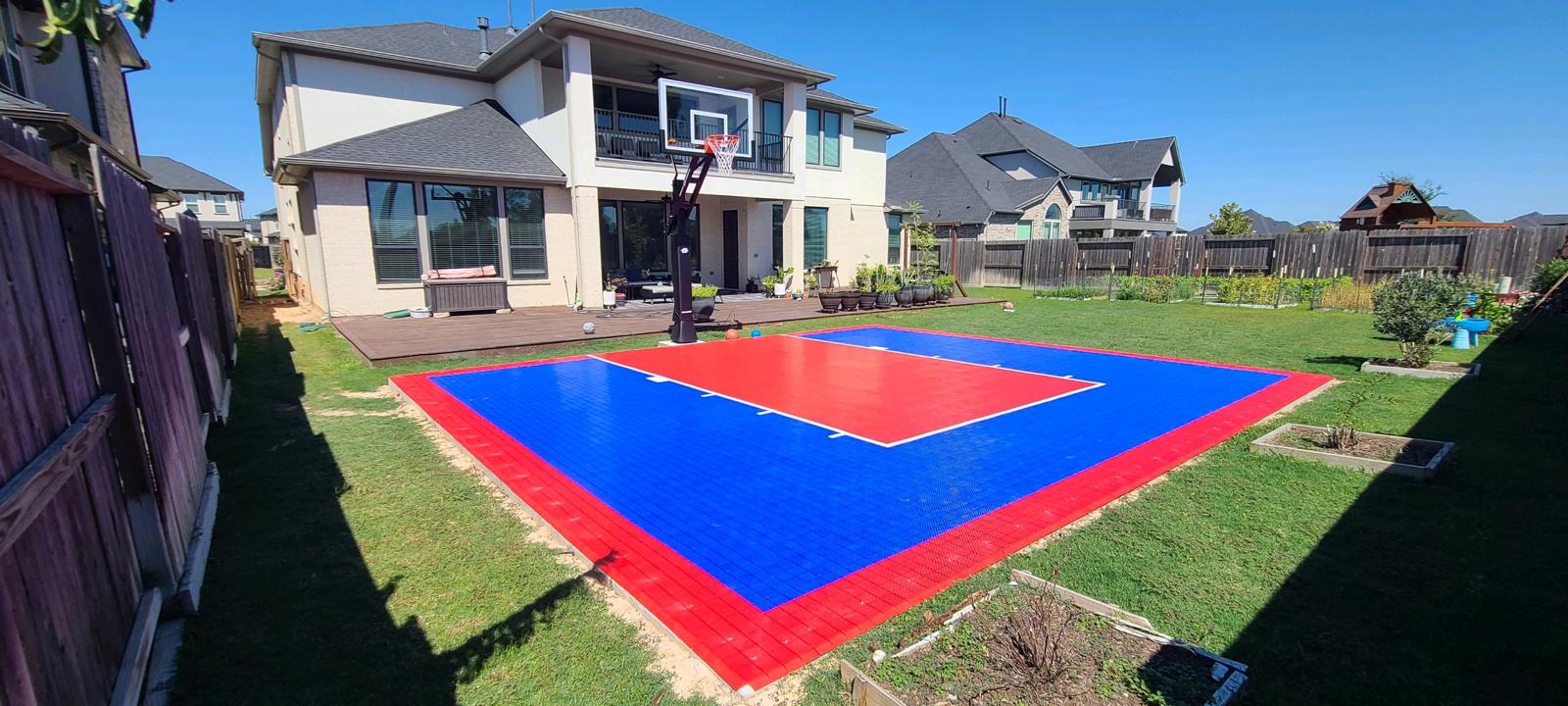
Resurfacing renews the playing surface while retaining the underlying usable asphalt or concrete base. It is the right middle ground for many courts that have moved beyond minor touch-ups but do not need complete reconstruction.
The amount of work depends on what we find. A faded backyard half-court may need only limited repair. A school court that hosts games every day may have old patches, worn keys, low spots, and several cracks to address.
A resurfacing project can include:
- Washing away soil, mildew, loose paint, leaves, and fine grit that would interfere with the new coating
- Checking cracks to see whether they are stable surface openings or signs of movement below
- Removing failed patch material before treating repairable cracks with compatible products
- Filling manageable low spots where water continues to sit after the rest of the court dries
- Patching chips, peeling areas, and shallow surface damage
- Applying an acrylic resurfacer to create a more even foundation for the color system
- Adding new color coats with the texture needed for reliable footing
- Measuring and painting the key, free-throw line, boundaries, center circle, and three-point arc
The finished court should not only look better from the gate. It should feel consistent when a player cuts across the lane, plants for a jump shot, or runs down a loose ball.
How Do You Know When Resurfacing Is Due?
Court age can be useful background information, but it should not be the sole basis for the decision. Sun, rain, drainage, player traffic, nearby trees, original construction, and maintenance all affect how quickly a surface deteriorates. A court usually gives plenty of warning before it becomes unusable.
The Key and Baselines Feel Smooth
The busiest sections wear first. Beneath the basket, players jump, land, pivot, and compete for rebounds. Along the perimeter, they plant their feet for shots and change direction during defense.
Over time, that movement can wear down the textured acrylic finish. If these areas still feel slick after the court has been properly cleaned, the coating itself may be worn.
Fresh line paint will not restore that lost grip. The complete playing finish needs attention.
Cracks Are No Longer Isolated
One thin crack near the edge may only require a small repair. Several cracks that cross the key or extend from the perimeter warrant closer inspection.
Cracks develop for different reasons. Pavement ages. Soil moves. Tree roots grow. Water reaches the base. Heat and changing temperatures place stress on the slab.
Some cracks can be repaired during resurfacing. Others may return because movement continues beneath. We consider their width, direction, previous repairs, and whether one side has begun to lift before recommending a solution.
Puddles Stay Beneath the Hoop
A basketball court should drain after rain. If the surface dries but water remains in the same shallow depression, that area has probably settled.
Ponding beneath the basket is especially inconvenient because it affects one of the court's most active areas. It can also leave dirt rings, encourage organic growth, and keep moisture against small surface openings.
A limited low spot may be patched. A broad settlement or a poor slope calls for a different repair. Adding another coating will not make water flow uphill.
The Color Looks Uneven
Sunlight gradually fades outdoor acrylic coatings. Heavy traffic accelerates changes in the key around the arc and near entry points.
Fading by itself may seem cosmetic, but thin color often appears alongside worn texture. Once the surface has become patchy and uneven to clean, complete resurfacing usually makes more sense than repeatedly touching up individual areas.
Players Struggle to Read the Lines
A faded free-throw line or three-point arc can confuse a game. Years of small touch-ups may also leave thick edges or slightly different layouts.
Resurfacing creates a clean background for new markings. The court can be measured again rather than tracing lines that may no longer be accurate.
Repairs Have Become a Routine Expense
There is nothing wrong with handling an isolated chip or crack. The problem begins when another damaged area appears every few months.
At that stage, patching one section at a time may cost more and fail to give the court a consistent finish. Resurfacing allows related repairs and surface wear to be handled together.
Does the Court Need Paint, Resurfacing, or Reconstruction?
These services are not interchangeable. Select an option below to compare:
Repainting Works for a Sound Surface
A court with good texture, stable pavement, and no serious drainage concerns may only need new color or lines.
Painting over loose coating, active cracks, or smooth playing areas will not solve those problems. They will still be there beneath the new finish.
Resurfacing Restores a Worn Finish
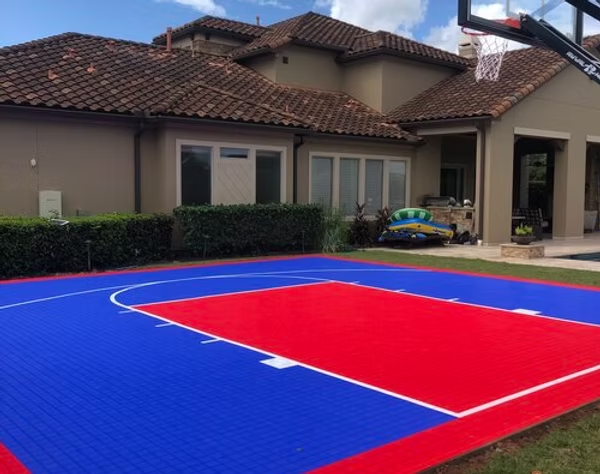
Resurfacing makes sense when the asphalt or concrete base remains usable, but the acrylic system is worn. Repairs are completed first, followed by resurfacer, color coats, and new markings.
It is often suitable for faded surfaces, worn texture, old patches, repairable cracks, and lines that need to be laid out again.
Reconstruction Deals With Failure Below
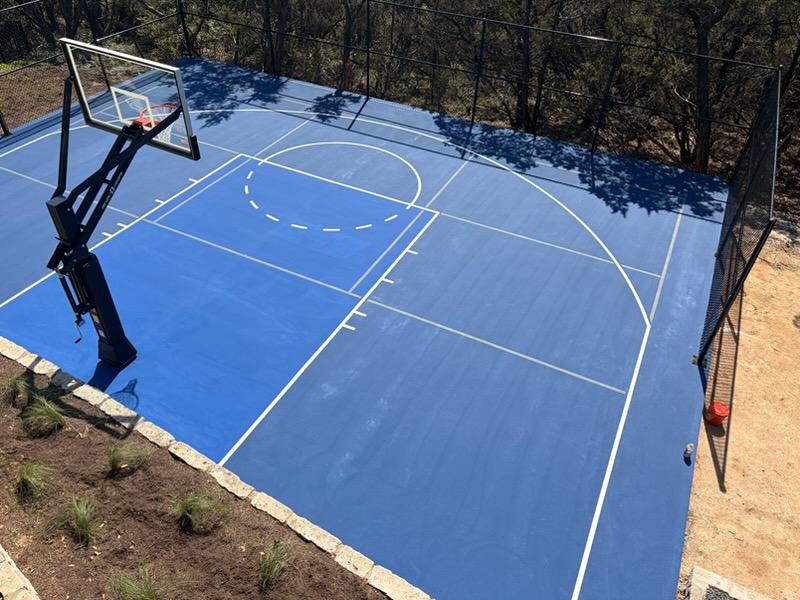
Some courts have moved past resurfacing. Severe settlement, crumbling pavement, widespread structural cracks, or major drainage problems may require base repair or reconstruction.
Quality & Heritage Court Services will say so if fresh coating is unlikely to hold. Covering a failed base may improve the view for a while, but the same damage usually works its way back through.
Our Basketball Court Resurfacing Process
We Start by Walking the Court
Before recommending materials, we examine how the court has aged. The key, baselines, pavement edges, old repairs, drainage, and areas around the hoop foundations receive particular attention.
We also ask how the court is used. A family half court has different demands from a school facility, public park, or training center.
The Surface Is Thoroughly Cleaned
A new coating needs direct contact with a sound surface. Dirt, mildew, loose acrylic, and old repair debris prevent that bond.
We clean the playing area, scrape away failed material, and prepare open cracks. Any organic growth receives suitable treatment. The court must dry before repair materials are applied.
This part of the job is not visible at the end, but it has a great deal to do with how well the finished surface holds up.
Repairable Damage Is Addressed
Suitable cracks are cleaned and filled with products designed to work beneath acrylic coatings. The repair is blended into the surrounding area so players do not feel an unnecessary ridge.
Small low spots may also be patched. Larger depressions require a closer look at pavement settlement and drainage before we decide what can be corrected through resurfacing.
No crack repair comes with a promise that the ground below will never move again. If we believe a crack is likely to return, we discuss that before the project moves forward.
The Acrylic System Is Applied
Once the repairs are ready, an acrylic resurfacer helps create a more uniform base. The color coats follow, with appropriate drying time between applications.
The final texture has to strike a balance. A surface that is too smooth can feel slippery. One that is overly coarse may be uncomfortable and wear balls quickly.
Weather has a say in this stage. Rain, humidity, overnight moisture, and unsuitable temperatures can delay application. Waiting for workable conditions is far better than trapping moisture beneath a new finish.
Lines and Graphics Are Added
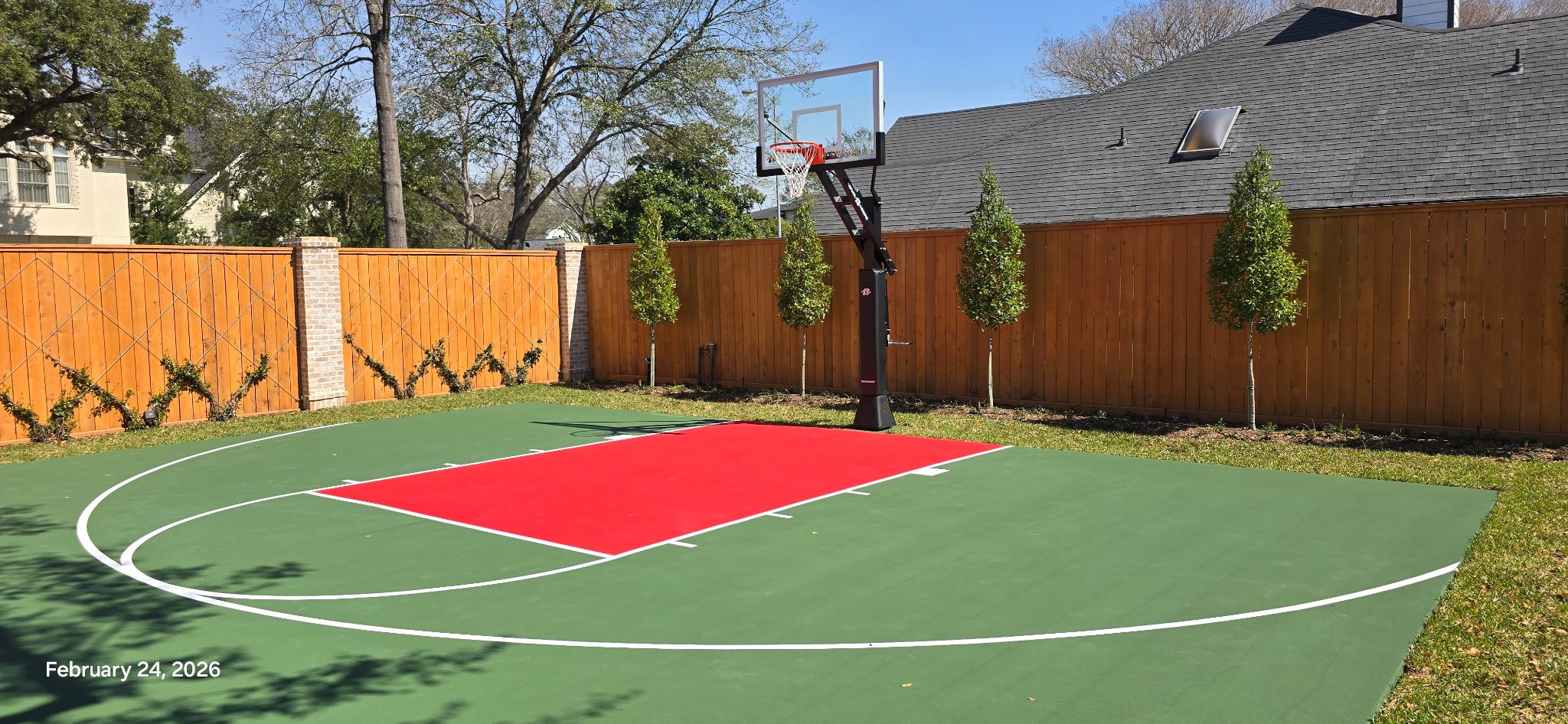
The court is measured after the color coats are ready. The boundaries, the key, the free-throw line, the center circle, and the three-point arc are then painted according to the approved layout.
A residential half court may use a custom arrangement. Schools and clubs may want team colors or a logo. Shared recreation areas may need secondary markings for pickleball or volleyball.
Additional lines should be visible without turning the floor into a tangle of competing colors.
We Review the Finished Court
Before reopening, we check the color, lines, repaired sections, hoops, and surrounding area. We also explain the required curing time.
A surface can look dry before it is ready for hard stops and pivots. Letting it cure properly protects the work completed during the previous several days.
Outdoor and Indoor Courts Need Different Work
Most outdoor basketball courts have an acrylic finish over asphalt or concrete. Indoor facilities may use hardwood, modular tiles, poured flooring, or synthetic systems.
They cannot all be resurfaced in the same way.
Outdoor work focuses on cracks, pavement, weather exposure, ponding, drainage, and acrylic coating adhesion. Indoor restoration may involve screening and recoating wood, repairing synthetic flooring, or replacing damaged tiles.
Before recommending a process, Quality & Heritage Court Services identifies the existing surface. Using the wrong cleaner, repair product, or coating can create a larger problem than the original wear.
What Does Basketball Court Resurfacing Cost?
The cost is shaped by more than square footage. Two courts of the same size can require very different amounts of preparation.
The estimate may be affected by:
- Court size: A full court requires more material and labor than a residential half court or compact shooting area.
- Surface condition: A faded but stable finish needs less preparation than a court with peeling coatings and failed patches.
- Crack treatment: The number, width, movement, and location of cracks determine the extent of repair work required.
- Ponding: One shallow low spot is different from widespread settlement or water entering from the surrounding property.
- Chosen surface: Standard acrylic and cushioned systems use different products and layer counts.
- Design: Multiple colors, logos, and custom graphics require additional time for layout and application.
- Court markings: A basketball-only layout is simpler than a shared court with several sets of lines.
- Access: Narrow gates, walls, landscaping, and limited equipment space can affect the work.
- Related repairs: Hoop, fencing, lighting, drainage, or major pavement work may be quoted separately.
An inspection makes the estimate more useful. It allows repairs, materials, colors, and line work to be defined before the project begins.
When comparing quotes, ask whether cleaning, crack repair, low-spot work, resurfacer, color applications, striping, and cleanup are included. A lower price can lose its appeal quickly if the essential preparation has been left out.
Contact Quality & Heritage Court Services for an estimate based on the court in front of you, not a generic price range.
Choosing the Surface and Design
Standard Acrylic Finish
A standard acrylic system provides color, playing texture, and familiar hard-court response. It works well for many residential, school, community, park, and commercial courts.
Cushioned Surface
A cushioned system adds resilient layers beneath the color coats. Some players prefer the softer feel during repeated running, jumping, and landing.
Cushioning does not stabilize a failing base. The pavement still needs to be suitable for the system to be installed.
Custom Colors and Logos
Resurfacing gives owners the chance to move away from the old color scheme. A backyard court can complement the home. Schools can incorporate team colors. Commercial facilities may choose restrained branding.
Logos should not interfere with traction or make lines harder to see. Detailed designs also need to account for future cleaning and touch-ups.
Shared-Use Lines
Pickleball or volleyball markings can be added when the available space and equipment layout allow it. Secondary lines should use a less dominant color so basketball boundaries remain easy to follow.
Why Quality & Heritage Court Services?
We build and restore complete courts, so our attention does not stop at the visible color.
We Investigate the Cause
A worn area may begin with drainage, pavement movement, contamination, or an earlier repair. We look beyond the visible color before making a recommendation.
We Understand Complete Court Construction
Our experience includes pavement, coatings, drainage, fencing, equipment, and lighting. That broader view helps us recognize conditions a paint-only contractor may overlook.
The Scope Fits the Property
A residential half court does not need the same plan as a school or commercial training facility. We account for usage, size, access, scheduling, design, and budget.
We Explain the Limits of Resurfacing
Our recommendations are based on the court’s condition and how people use it. A private half court does not need the same plan as a school or commercial training facility.
Quality & Heritage Court Services also explains what resurfacing cannot do. If settlement or structural movement is likely to reopen a crack, owners deserve to know before paying for a new finish.
From inspection and repair through color selection, striping, and final review, the project remains connected under a single team.
Who We Serve
Our services can be adapted to several types of properties:
Homeowners and private estates
Backyard half courts, full courts, and custom practice areas
Schools and universities
Courts used for classes, athletics, training, and student recreation
HOAs and communities
Shared facilities serving residents of different ages and abilities
Hotels and resorts
Recreation areas that need to match the standard of the wider property
Parks and municipalities
Public courts exposed to heavy traffic and outdoor weather
Clubs and commercial facilities
Playing areas used for lessons, camps, scheduled bookings, and branded recreation spaces
Commercial properties
Branded recreation spaces that must remain attractive and dependable