
Overview
Professional Cushion X court maintenance protects the surface without treating it like ordinary concrete. The cleaning method, repair products, equipment, and inspection routine must suit both the acrylic top coating and the cushioned layers beneath it.
Quality & Heritage Court Services maintains Cushion X surfaces for homes, schools, clubs, HOAs, hotels, training facilities, and commercial properties. Because we understand how the system is installed, we know where wear usually develops and which maintenance methods can preserve its playing qualities.
Want to keep your court comfortable, clean, and ready for play? Contact our team today to arrange an inspection.
Why Cushion X Needs Specialized Maintenance
Cushion X is a multilayer surface designed to provide dependable traction, controlled ball response, and a more forgiving feel underfoot. It can support pickleball, tennis, basketball, and multi-use layouts.
The acrylic top coating takes the direct wear from shoes, balls, weather, cleaning, and regular use. The cushioned system beneath provides a softer response, making the surface feel different from a standard hard court.
Maintenance has to respect both.
- Aggressive cleaning can damage the playing texture: Too much water pressure or the wrong chemical may leave streaks, thin the coating, or create areas that feel smoother than the rest of the court.
- Rigid repairs may not move with the surrounding system: A crack filler designed for an ordinary pavement surface may behave differently from the cushioned layers beneath it, leaving a noticeable ridge or hard spot.
- Heavy equipment can compress or mark the finish: Portable hoops, benches, cleaning machines, and other objects require suitable wheels or protective contact points before being moved across the court.
- Subsurface warning signs: Small surface changes such as bubbling, recurring cracks, and peeling can be linked to moisture, pavement movement, or a loss of adhesion beneath the visible finish.
Good maintenance does more than make the surface look clean. It helps preserve the comfort and playing response that made Cushion X worth installing.
Cleaning a Cushion X Surface Safely
The best cleaning method is usually the least aggressive option that effectively removes dirt.
Begin With Dry Debris
Leaves and grit should be removed before washing starts. Once they become wet, they can stick to the textured finish or collect along fence lines and court edges.
Soft-bristled brooms, suitable blowers, and court-safe cleaning machines can clear the surface without scraping it. Corners, net posts, gate areas, and the spaces beneath benches deserve extra attention.
Leaves should not remain through repeated rain. As they break down, they hold moisture against the coating and may leave dark stains that become harder to remove.
Use Products Made for Acrylic Surfaces
Many ordinary stains can be handled with water and a mild, compatible cleaning solution. Household cleaners containing strong solvents, waxes, concentrated degreasers, or residue-forming ingredients may damage the finish or change its traction.
The source of the stain matters. Tree sap, algae, grease, rust, food, and ordinary soil do not necessarily require the same treatment.
Quality & Heritage Court Services checks the coating and contamination before deciding how to clean it. That helps avoid using a strong product across the entire court when only a small area needs special attention.
Be Careful With Pressure Washing
Pressure washing may be appropriate in some situations, but more pressure does not necessarily yield better results. Holding a nozzle too close can strip texture, mark repaired sections, or leave pale lines across the coating.
A healthy finish may tolerate more than a section that is already worn or beginning to peel. The surface should be inspected before pressure equipment is used.
Deal With Spills Early
Drinks, sunscreen, food, gum, and other spills are common around schools, clubs, and community facilities. Once a sticky patch dries, it traps dust and can feel different beneath a player’s shoe.
Prompt blotting and gentle cleaning are usually more effective than aggressive scraping later. Metal blades and stiff tools should never be used to lift residue from the coating.
Where Wear Usually Appears
Cushion X can support several activities, but each game places repeated traffic in different parts of the surface. Select a layout below:
Pickleball Courts
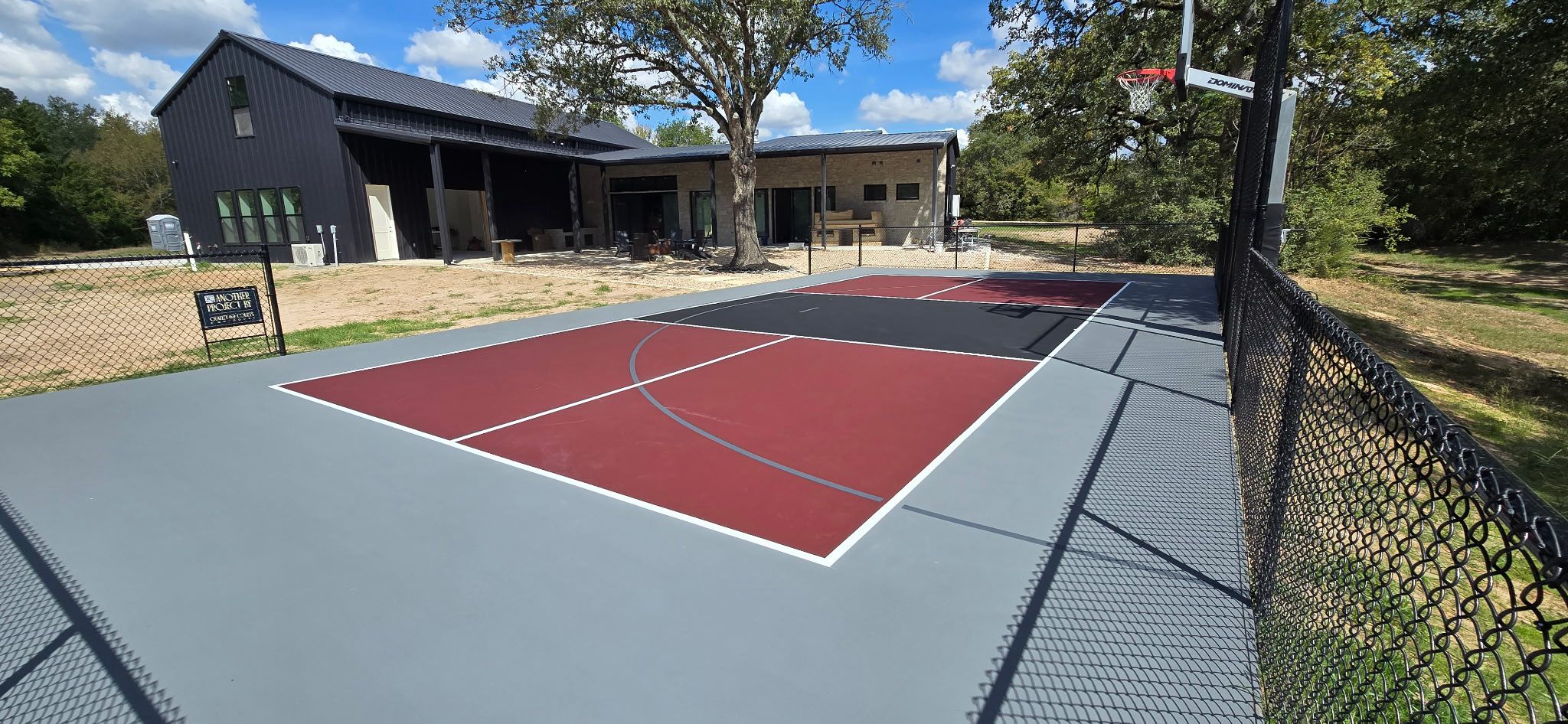
Most movement concentrates around the non-volley zone and baselines. Players stop, reach, and move laterally just behind the kitchen line, while repeated serving and returning wear the baseline areas.
These sections should be checked for smooth patches, embedded shoe residue, faded markings, and dirt collecting along the line edges.
Tennis Courts
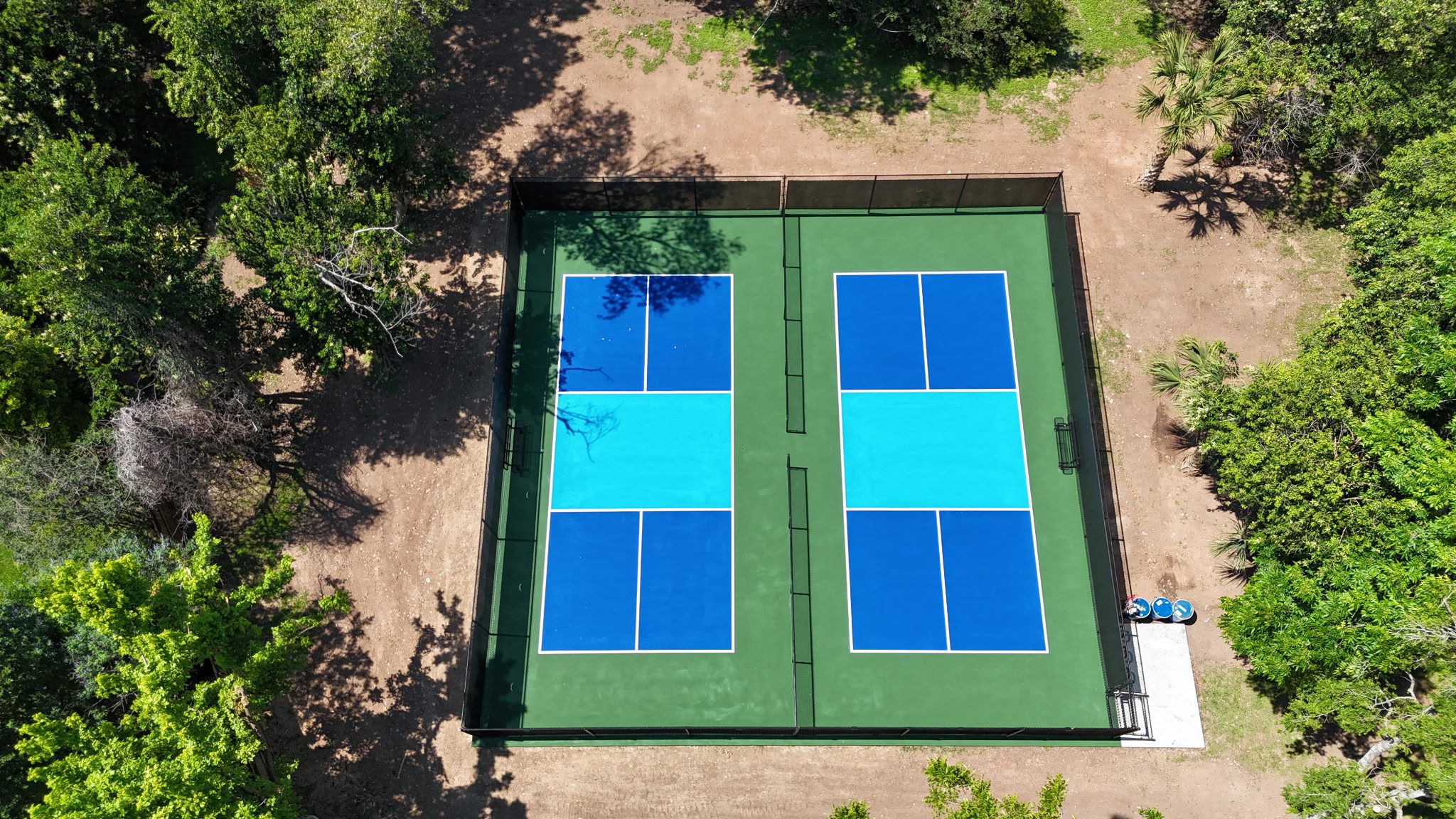
Tennis players spend much of a match moving along and behind the baselines. These areas often lose texture and color first, while the corners remain relatively fresh.
Ball fuzz, soil, and loose grit may gather near fence lines and gates. Cracks crossing high-traffic areas deserve early attention before their edges begin to lift.
Basketball Courts
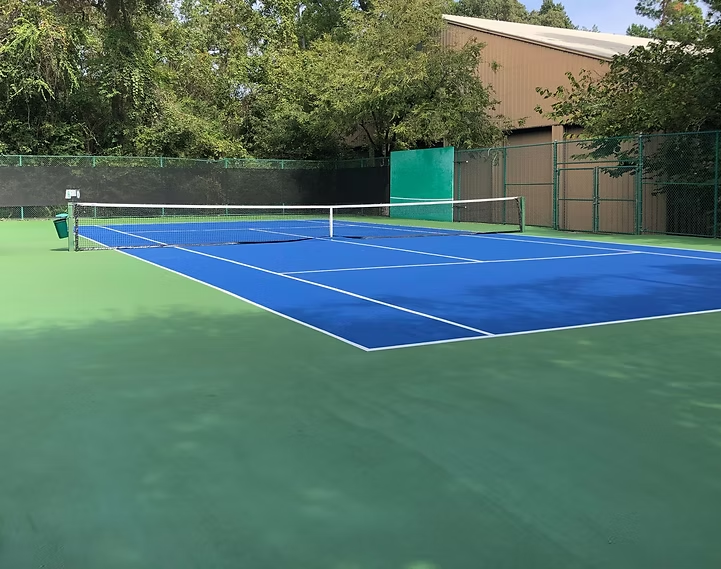
The key, free-throw area, and space beneath the hoop handle repeated jumps, landings, pivots, and abrupt changes in direction.
Portable basketball goals should never be dragged across the coating. Their bases, wheels, support points, and anchors should be checked regularly to prevent them from scratching or compressing the cushioned finish.
Multi-Use Courts
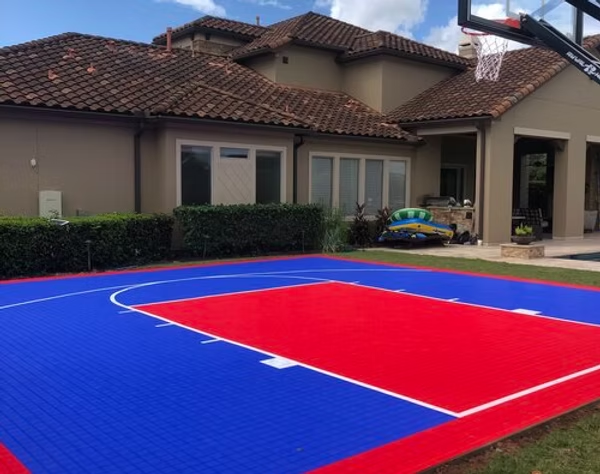
A shared court may carry several line layouts and different patterns of foot traffic. One activity may wear its markings much faster than another.
Maintenance should preserve a clear visual order. Primary boundaries need to remain easy to follow, while secondary lines should be visible without making the surface confusing.
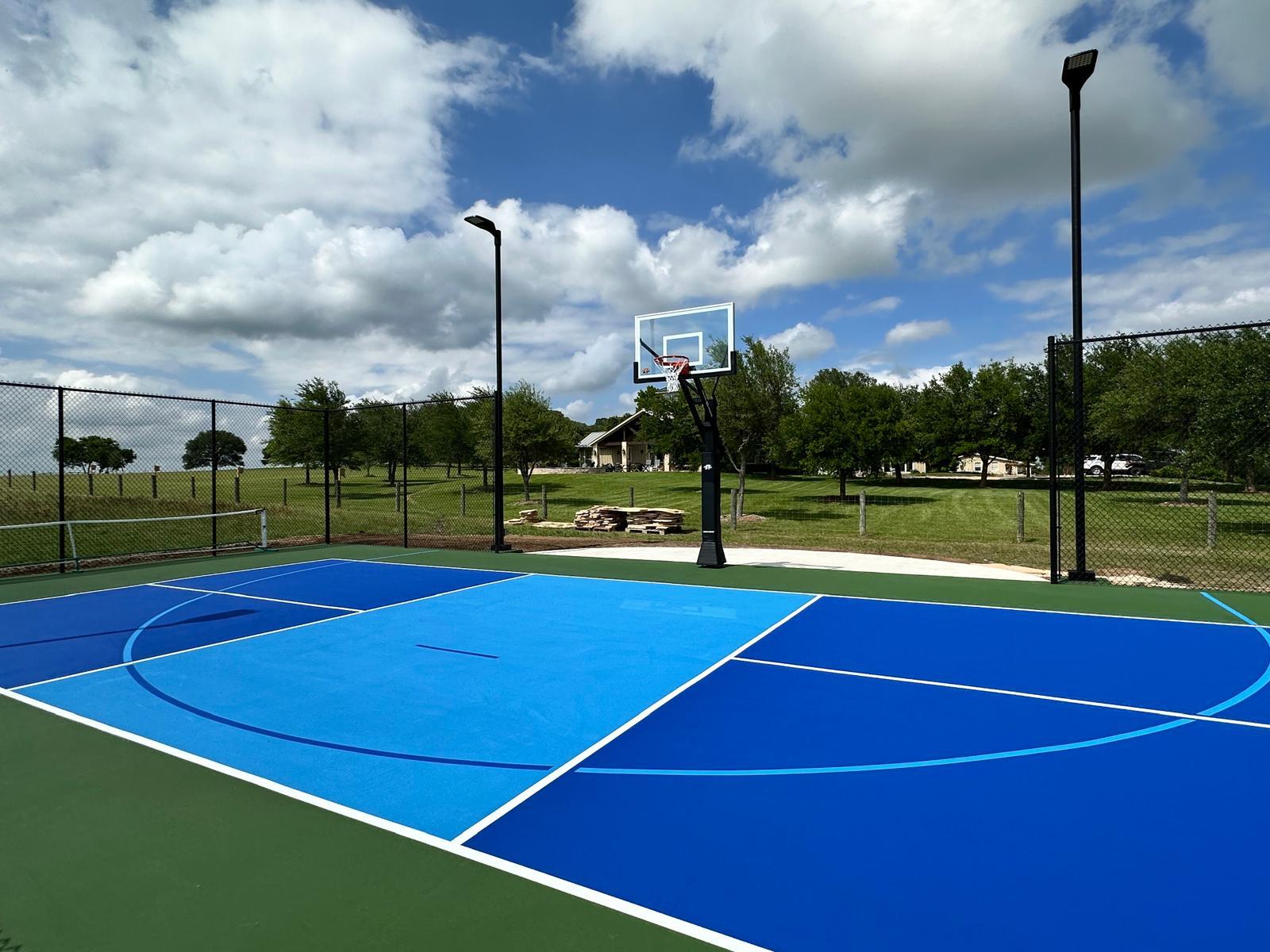
Drainage Matters to a Cushioned Surface
Cushion X is suitable for outdoor use, but no acrylic system benefits from standing water. Puddles leave dirt rings, encourage algae, and keep portions of the court unavailable after rain. Water entering an open crack may also reach deeper layers or the pavement below.
Professional maintenance includes checking:
- Low areas that remain wet: Small depressions may be repairable, while broad ponding may point to settlement or an incorrect slope.
- Drains and channels blocked by debris: Leaves, soil, grass clippings, and mulch can prevent water from leaving the area even when the original drainage plan is sound.
- Landscaping directing runoff: Raised soil beds, changing grades, and misplaced downspouts can introduce water that the surface was not designed to receive.
- Sprinklers hitting the court: Repeated irrigation can keep edges damp, leave mineral stains, and encourage organic growth.
- Soil collecting against pavement edges: Soil and mulch should not build up high enough to trap moisture or allow weeds to grow against the coating.
The court should also be inspected after severe storms, flooding, or prolonged heat. Extreme conditions often reveal surface or drainage concerns that are easy to miss during ordinary use.
Protecting Lines, Logos, and Custom Colors
Cushion X courts may include several game layouts, color zones, school emblems, or branded graphics. These details need the same attention as the broader playing area.
Line touch-ups can work when the surrounding coating remains sound. If the complete surface has faded or lost texture, repainting only the lines may make the remaining wear more noticeable.
During maintenance, we check:
- Whether boundaries remain easy to read during play; faded lines can create confusion, particularly on a multi-use court with overlapping layouts.
- Whether the line edges are lifting or thickening; years of separate touch-ups can create raised sections that look untidy and feel different underfoot.
- How logos are wearing compared with nearby coatings. Detailed edges and several colors may fade at different rates or require more careful cleaning.
- Whether one color zone is receiving heavier traffic. Uneven wear may help determine which areas need more frequent cleaning or future coating work.
Aggressive scrubbing around graphics should be avoided. Fine edges can wear more quickly than the larger color fields around them.
How Often Should Maintenance Be Scheduled?
A private home court may need professional service once or twice a year. An HOA, school, hotel, or club may benefit from quarterly visits. A commercial facility with daily bookings may need a schedule built around its busiest periods.
The right frequency depends on:
- Player volume and activity type: Daily lessons, leagues, and open play create more wear than occasional family use.
- Indoor or outdoor conditions: Outdoor courts face rain, sun, windblown grit, and vegetation. Indoor facilities still collect dust, spills, and heavy shoe traffic.
- Shade and landscaping: Courts beneath trees or beside irrigated planting beds often need more frequent cleaning and drainage checks.
- Property expectations: Hotels, clubs, and commercial venues may need a higher presentation standard because the court is part of the customer experience.
Between professional visits, property staff can remove loose debris, clean spills, check for standing water, and report any new cracks or bubbles.
Our Cushion X Maintenance Process
We Inspect the Complete Facility
The visit begins with the playing surface, but it does not stop there. We review drainage, lines, nets, hoops, fencing, gates, windscreens, access points, and nearby landscaping.
We also ask whether players have noticed changes in grip, bounce, or comfort.
We Clean According to the Surface Condition
Loose debris is removed first. Cleaning products and equipment are then selected for the acrylic coating and the type of contamination present.
Shaded sections, high-traffic zones, and stained areas receive closer attention without subjecting the entire court to unnecessarily aggressive treatment.
We Check Damage and Equipment
Cracks, bubbles, worn texture, low spots, faded markings, posts, hoops, nets, and portable equipment are reviewed.
Minor adjustments within the maintenance scope may be handled during the visit. Larger concerns are documented and discussed rather than temporarily hidden.
You Receive a Clear Condition Summary
Quality & Heritage Court Services explains what was cleaned, what needs attention, and what should be monitored.
If repair or resurfacing is becoming more appropriate than continued maintenance, we explain the difference and help you plan the next step.
What Affects Maintenance Cost?
The price depends on the condition and service requirements, not simply the court’s dimensions.
- Court quantity and surface area: Several courts at a school or club require more time than one residential playing area, even when each surface remains in good condition.
- Dirt, stains, mildew, and debris: A regularly swept indoor court will need different work from an outdoor surface surrounded by trees and irrigation.
- Cracks and drainage concerns: Routine inspection can identify these problems, but repairs or low-spot correction may fall outside the scope of standard cleaning.
- Lines, logos, and multi-use layouts: Detailed graphics and overlapping markings may need controlled cleaning or future touch-up work.
- Facility access and operating hours: Clubs, hotels, and schools may need service planned around bookings, classes, or guest use.
Contact our team for a maintenance estimate based on the actual condition and use of your Cushion X court.
Why Quality & Heritage Court Services?
We Know How the System Is Built
Quality & Heritage Court Services installs Cushion X as a multilayer surface. We understand how the cushioned base, acrylic coating, pavement, drainage, and playing equipment work together.
That experience helps us avoid rigid repair materials or aggressive cleaning methods that could damage the system.
We Know When Cleaning Is Not Enough
A dirty court may respond well to professional cleaning. A peeling, worn, or delaminating coating requires a different solution.
We do not keep scrubbing a damaged area and call it maintenance. Owners receive an honest explanation when repair or resurfacing proves to be the better investment.
We Build the Plan Around Real Use
A family pickleball court does not need the same schedule as a club operating from morning until night. We consider the activity, traffic, environment, graphics, operating hours, and property expectations.
We Inspect More Than the Playing Surface
Nets, hoops, anchors, fencing, gates, drainage, and surrounding landscaping can all affect the court.
Looking at the complete facility helps us catch loose equipment, runoff, and access concerns before they damage the cushioned finish.